
Lawn
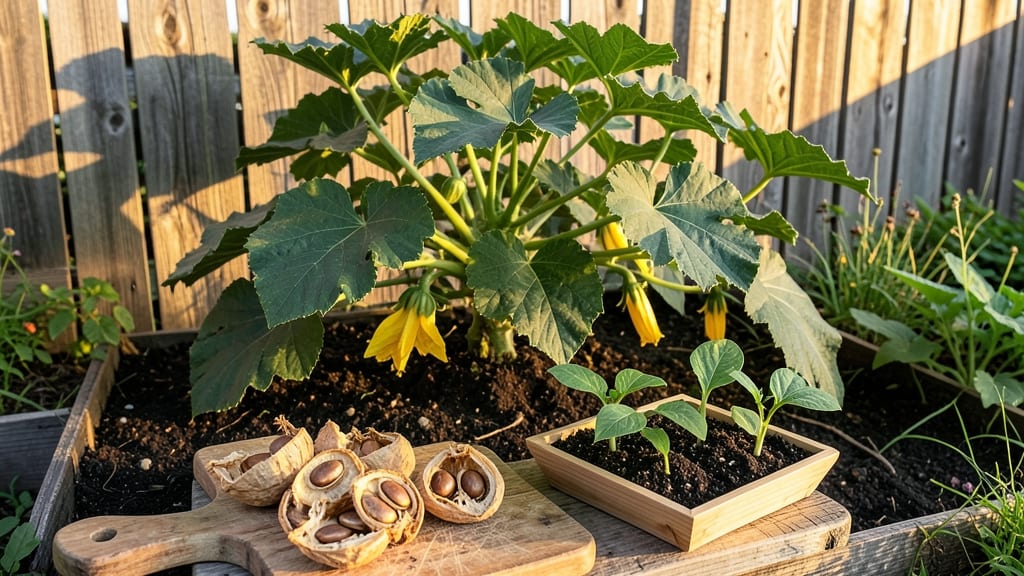
Mastering squash seed identification before planting saves you from guessing what grows in your garden. 🌱 I’ve learned the hard way—planting a pumpkin seed thinking it’s zucchini leads to a monster vine and tiny fruit.
The key lies in seed shape, color, and markings: zucchini seeds are flat and oval with a smooth, pale tan shell, while butternut seeds are slightly curved and darker with a speckled look.
Why does this matter? Different squash need different care: zucchini thrive in warm soil and produce fast, while pumpkins need more space and time. Heirloom seeds often have distinct textures or patterns, while hybrids may look uniform.
A quick glance at seed packets or a magnifying glass can reveal clues—just look for ridges, bumps, or even tiny "eyes" that hint at the plant’s future.
Once you master these visual cues, you’ll plant with confidence. Imagine harvesting vibrant zucchini in 45 days instead of waiting months for a giant pumpkin. The right seed means the right harvest—no surprises, just satisfaction. Let’s break down the visual differences so you never mix them up again.
This works for any squash variety, from acorn to spaghetti squash. Grab a handful of seeds and a bright light—you’ll spot the differences in minutes. No more guessing, just growing what you love.
📚 In This Guide
- What you need
- Instructions
- Tips and common mistakes
- Wrapping up and next steps
What you need
- ● Fresh squash varieties: 3-5 mature squash (e.g., butternut, zucchini, acorn, or pumpkin) to compare seeds from different types.
- ● Sharp kitchen knife or pruning shears: For safely cutting open squash to access seeds.
- ● Cutting board: A sturdy, large board to protect surfaces and provide stability.
- ● Colander or fine-mesh strainer: To rinse seeds and separate them from pulp.
- ● Paper towels or clean cloth: For drying seeds after rinsing.
- ● Small bowls or containers: 3-5 shallow dishes (one per squash type) for sorting seeds.
- ○ Magnifying glass (optional but helpful): A 2x-4x magnification lens to inspect seed details closely.
- ● Ruler or measuring tape: To measure seed size (in inches or millimeters) for documentation.
- ● Notebook or digital device: For recording observations (e.g., seed shape, color, texture).
- ● Permanent markers or labels: To mark containers or seeds with variety names.
- ● Reference guide or app: A printed guide or smartphone app (e.g., Seed Savers Exchange) for cross-checking traits.
- ● Digital scale: To weigh seeds (useful for comparing density across varieties).
- ● Camera or smartphone: For high-resolution photos of seeds (include a coin for scale).
- ● Seed catalog or field guide: A book specific to squash varieties for advanced identification.
- ● Glass jars with lids: For long-term seed storage after identification.
- ● Gloves (nitrile or latex): To keep hands clean while handling wet or slimy pulp.
How to identify squash seeds before harvesting
Mastering this skill saves you from guesswork—and wasted effort—when planning next year's garden.
🌱 Step 1: Examine the Plant Structure for Clues
Start by observing the squash plant itself. Vine growth habits reveal a lot: bush varieties like zucchini grow in compact mounds, while vining types like butternut sprawl aggressively. Check the leaf shape—acorn squash leaves are deeply lobed, while spaghetti squash leaves are broad and smooth-edged.
Look at the flowers: summer squash (like zucchini) produce both male and female blooms on the same vine, while winter squash (like pumpkins) often have separate male and female plants. Female flowers will have a tiny squash forming at their base—this is your first visual confirmation of the variety.
🌿 Step 2: Study the Fruit Shape and Skin Texture
When the fruit is young (about 3-5 inches long), note its shape. Zucchini stays cylindrical, yellow crookneck curves dramatically, and acorn squash develops a distinct ribbed, teardrop form. Press the skin lightly—winter squash like butternut has a hard, woody rind, while summer squash stays tender and slightly waxy.
Color patterns matter too: pattypan squash has scalloped edges with alternating green and yellow stripes, while delicata features white stripes on green skin. Take photos of unique markings—some varieties like boothby's green stripe have distinctive coloration that disappears as they mature.
✂️ Step 3: Harvest a Test Sample for Seed Analysis
Select one mature fruit from each plant type you're unsure about. Cut it open lengthwise to examine the interior: spaghetti squash has stringy, fibrous flesh, while acorn stays dense and sweet. Note the seed cavity size—pumpkins have massive central cavities, while zucchini seeds cluster in a small central pocket.
Save the seeds by scooping them into a bowl of water. Viable seeds sink immediately (discard any that float—they won't germinate). Spread the good seeds on paper towels to dry completely before storing in a labeled envelope. This preserves them for next season while giving you a physical reference for identification.
📸 Step 4: Compare With Reference Guides
Use a squash variety identification chart (available from seed companies or gardening apps) to match your observations. Focus on these key traits: fruit shape, skin texture, vine growth habit, and flower structure. I keep a small notebook by my garden bench where I sketch each variety's unique characteristics alongside my test samples.
Don't rely on color alone—some varieties like black beauty zucchini start dark but fade to green. Instead, combine all observations: a cylindrical shape + smooth skin + compact vine = likely zucchini, while a ribbed, teardrop shape + hard rind = acorn squash. Real talk: the more details you record, the easier next year's garden planning becomes.
Tips & tricks for perfect squash seed identification
Here's what nobody tells you—these visual cues will help you confidently distinguish squash varieties before harvest.
Leaf Shape is Your First Clue: Pay special attention to Step 1's leaf details. I've found that acorn squash leaves have those distinctive deep lobes that look almost like tiny maple leaves, while spaghetti squash leaves are broad and smooth. Take a close-up photo of each plant's leaves and compare them side by side—this visual reference becomes your quick ID guide when you're standing in the garden.
Watch the Flowers for Gender Reveals: In Step 1, the instructions mention female flowers having tiny squash forming at their base. Here's what I learned the hard way: male flowers appear first and are easy to pull off without consequence, but female flowers with developing fruit are precious. Mark these plants immediately with colorful flags or plant stakes so you don't accidentally remove them when weeding.
Seed Cavity Size Matters: When you examine the seed cavities in Step 3, remember this rule: the larger the seed cavity, the longer the growing season needed. Pumpkins with their massive central cavities need more time to mature than zucchini with their small pockets. This knowledge helps you plan your garden layout—place pumpkins where they have more space to sprawl and longer to grow.
Document Like a Botanist: The instructions suggest using reference guides, but I take it further by creating a simple chart with columns for vine type, leaf shape, fruit shape, skin texture, and seed cavity size. After your first growing season, you'll have a visual encyclopedia of your garden's squash varieties that makes identification effortless in future years.
Pro Tips for Squash Seed Identification
- Here's what nobody tells you—these visual cues will help you confidently distinguish squash varieties before harvest.
- Leaf Shape is Your First Clue: Pay special attention to Step 1's leaf details.
- Watch the Flowers for Gender Reveals: In Step 1, the instructions mention female flowers having tiny squash forming at their base.
Frequently asked questions
Got questions about squash seed identification?
You’re not alone! Here are some of the most common queries—plus quick answers to help you confidently distinguish your varieties before harvest time.
How do I tell the difference between summer and winter squash seeds?
Summer squash (like zucchini or yellow squash) produce flat, disc-shaped seeds in small, round cavities. Winter squash (such as butternut or pumpkin) have larger, oval seeds embedded in stringy pulp. Check the seed shape and fruit texture—summer squash seeds are easier to spot in tender flesh, while winter squash seeds are nestled deeper.
When is the best time to identify squash seeds before harvesting?
Wait until the squash is fully mature (usually 70–100 days after planting) but still firm to the touch. Cut open a sample fruit to examine seeds—this avoids damaging young plants while giving you time to plan for seed saving or variety confirmation. Pro tip: Take photos of seeds and compare them to reference guides if unsure!
Can I use squash seeds from store-bought squash for planting?
Not reliably! Store-bought squash seeds are often hybridized or treated to prevent germination. For consistent results, save seeds from heirloom or open-pollinated varieties grown in your garden. If you’re curious, try planting them anyway—you might get surprises (or nothing at all)!
What if my squash seeds look moldy or discolored?
Moldy or discolored seeds are a red flag—discard them immediately! This could signal rot, fungal infection, or poor storage. To prevent issues, store seeds in a cool, dry place (like a sealed container with silica packets) and clean them thoroughly before saving. Pro tip: Rinse seeds in a 10% bleach solution (1 part bleach to 9 parts water) for 10 minutes to kill pathogens.
How do I measure squash seed size for identification?
Use a ruler or caliper to measure seeds in millimeters. Summer squash seeds are typically 3–5mm wide, while winter squash seeds range from 8–15mm. For accuracy, measure 10 seeds and average the results—seed size can vary even within the same variety. Pro tip: Snap a photo next to a coin (like a quarter) for a quick visual reference!
Wrapping up and next steps
Mastering squash seed identification is your ticket to a thriving garden and a bountiful harvest! By understanding the unique traits—whether it’s the shape, color, or growth patterns—of your squash varieties, you’re well on your way to confidently distinguishing them before they even ripen. 🌱
Now that you’re armed with this knowledge, why not put it into action? Start by labeling your plants or sketching their key features in a garden journal. Happy growing—your future harvests will thank you!