
Lawn
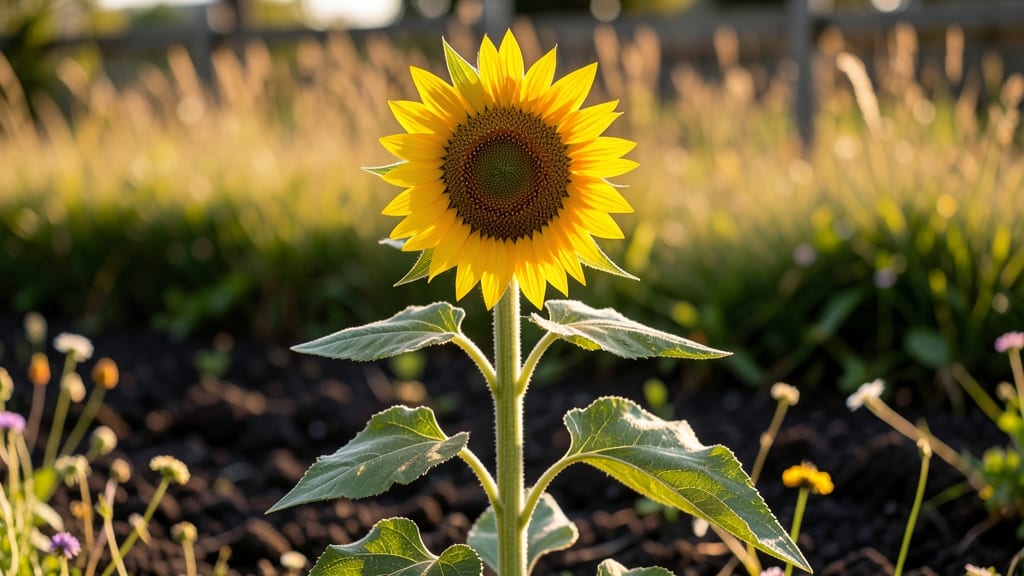
A sunflower seed identification chart saves you from guessing which giant blooms will top your fence or which tiny types will thrive in containers. 🌻 I’ve spent years sorting through seed packets, and the key traits—leaf shape, seed head size, and color—make all the difference between a towering sunflower and a compact one that stays put.
The biggest mistake? Skipping the seed packet details. Look for height ranges (dwarf types stay under 3 feet, giants reach 12+), leaf descriptions (lance-shaped vs. broad), and bloom colors (golden-yellow classics or deep reds).
Cross-check with databases like the American Sunflower Society to confirm edible vs. ornamental varieties—some look identical until they flower.
By the end of this, you’ll spot a Russian Mammoth seed from a Teddy Bear just by its size and leaf shape. The chart breaks it down so you can match seeds to your space, whether that’s a 5-gallon pot or a full sun patch.
No more surprises when those 10-foot monsters outgrow your garden plan.
Pro tip: Take photos of mature plants in your garden and compare them to the chart next year—soon, you’ll recognize varieties by sight alone. The more you grow, the easier it gets to pick seeds that fit your vision, not just your yard.
📚 In This Guide
- What you need
- Instructions
- Tips and common mistakes
- Wrapping up and next steps
What you need
- ● Sunflower seeds – A mix of at least 5-10 different varieties (if available) to compare traits like size, color, and texture.
- ● Magnifying glass or hand lens – A 10x magnification lens works best for examining fine details.
- ● Ruler or measuring tape – For recording seed dimensions (inches or millimeters).
- ● White or light-colored tray or paper – Helps contrast seed colors for better visibility.
- ● Notebook or digital device – To log observations (use a printable chart template for consistency).
- ● Pencil or fine-tip marker – For labeling seeds during identification.
- ● Small brush or cotton swabs – Gently removes debris from seeds without damaging them.
- ● Reference guide or sunflower seed identification chart – A printed or digital chart (like the one you’re creating!) to cross-check traits.
- ● Digital camera or smartphone – Capture close-ups of seeds for later review.
- ● Seed catalog or botanical database – For verifying rare or heirloom varieties.
- ● Humidity-controlled storage – Preserves seed integrity if testing spans multiple days.
- ● Gloves (nitrile or latex) – Protects hands from oils in seeds (especially if allergic).
- ● UV flashlight – Reveals hidden patterns or fluorescence in some seed coats.
How to identify sunflower varieties using key seed traits
Mastering sunflower seed identification turns casual gardening into a rewarding skill—here's how to spot the differences with confidence.
🌱 Step 1: Examine Seed Head Shape and Size
Sunflower varieties fall into two primary categories based on their seed heads: single-headed (like Mammoth or Russian Giant) and branching (like Teddy Bear or Autumn Beauty). Measure the diameter of a mature head—single varieties typically range from 4 to 16 inches, while branching types produce clusters of smaller heads (usually 2-6 inches each). Hold the seed head against a ruler or tape measure for precision; the difference between a 6-inch and 12-inch head is your first clue to the variety.
Next, observe the overall shape. Single-headed varieties like 'Autumn Beauty' have a rounded, dome-like appearance, while branching types like 'Teddy Bear' develop multiple stems radiating outward. I always check for symmetry—asymmetrical heads often indicate cross-pollination or disease, not a distinct variety trait.
🌿 Step 2: Analyze Seed Color and Pattern
Seed color is the most visually striking trait for identification. Black oil sunflowers (like 'Mordovia' or 'Pervenets') have uniform dark seeds, while striped varieties (such as 'Moulin Rouge') display bold red, yellow, or white bands. For confetti sunflowers (like 'Autumn Beauty'), seeds appear mottled with multiple colors—think deep reds, oranges, and yellows in a chaotic pattern. Hold the seed head near a white background to distinguish subtle color differences.
Pay attention to seed density and spacing. Tightly packed seeds (like those on 'Russian Giant') suggest a heavier, oil-rich variety, while loosely arranged seeds (common in 'Teddy Bear') indicate decorative or bird-friendly types. I’ve found that magnifying the seeds with a 3x loupe reveals hidden patterns—some varieties have tiny speckles or faint stripes only visible up close.
☀️ Step 3: Assess Plant Height and Stem Characteristics
Height is a critical identifier, especially for giant varieties. Measure from the base to the highest point of the seed head—tall varieties (like 'Mammoth' or 'Russian Giant') can reach 10-14 feet, while dwarf types (such as 'Teddy Bear') max out at 2-3 feet. Use a tall measuring tape or a ladder with a built-in ruler for accuracy. Note whether the stem is single or branching—branching stems (like those on 'Autumn Beauty') produce multiple smaller heads along the same plant.
Examine the stem texture and color. Most sunflower stems are rough and hairy, but smooth, green stems are common in decorative varieties like 'Procutto'. Look for leaf arrangement: alternate leaves (one leaf per node) are standard, but opposite leaves (pairs at each node) can signal a hybrid or rare variety. I always check for pithiness—hollow stems indicate young plants, while solid stems suggest maturity.
⏰ Step 4: Note Flowering Time and Seed Maturity
Sunflowers bloom at different times, which helps narrow down varieties. Early bloomers (like 'Teddy Bear') open 60-70 days after planting, while late-season varieties (such as 'Russian Giant') take 100-120 days. Track the days to maturity from seed packet records and compare with your observations. For seed maturity, watch for seed head browning—when the back of the head turns tan or brown, seeds are ready for harvest.
Check for seed moisture content by squeezing a seed between your fingers. Dry seeds (ready for storage) will crackle slightly, while moist seeds feel soft. I’ve learned that overripe seeds (left too long on the plant) lose viability, so harvest when 80% of seeds show the mature color. For oil varieties, seeds should be completely dry and hard before pressing.
🌱 Step 5: Cross-Reference with Known Varieties
Compare your findings to a reliable sunflower identification chart (like those from the American Sunflower Society or Burpee Seeds). Note whether your plant matches traits like seed head size, color, height, and branching pattern. For example, if your plant has striped seeds, a single head, and reaches 10 feet, it’s likely a 'Moulin Rouge' or 'Evening Sun'. I keep a field notebook with sketches of seed heads and notes on plant behavior—this helps track hybrids or unknown varieties over time.
When in doubt, consult local seed savers or gardening forums. Share photos of the seed head, stem, and leaves with details like location and growing conditions. Many rare varieties (like 'Russian Mammoth' or 'Autumn Beauty') have distinct but subtle traits that only experienced growers can spot. I’ve identified several unknown varieties this way—community knowledge is your best tool for tricky cases.
Tips & Tricks for perfect sunflower variety recognition
Here's what nobody tells you about turning casual observation into expert-level sunflower identification.
Precision Measurement Matters: When examining seed head diameters in Step 1, use a flexible tape measure instead of a ruler for heads over 6 inches—it's far more accurate. I've found that holding the tape at the widest point (just below the petals) gives consistent results. For branching varieties, measure each individual head separately to avoid averaging errors that could mislead identification.
Lighting Tricks for Color Analysis: In Step 2, natural daylight is your best friend for color assessment. Place the seed head near a north-facing window (avoid direct sunlight) to eliminate color distortion. I've seen striped seeds appear uniform under artificial light—only natural light reveals the true color complexity. For indoor work, use a daylight LED bulb rated 5000K+ to mimic sunlight accurately.
Stem Inspection Shortcuts: For Step 3's stem characteristics, focus on three key areas: the base (where it meets the soil), the middle (halfway up), and the top (near the seed head). I've discovered that disease patterns often appear first at the base, while hybrid traits show up in the middle section. Bring a hand lens (10x magnification) to examine leaf scars and stem hairs—these microscopic details can reveal variety hybrids that visual inspection misses.
Maturity Timeline Tracking: Create a simple chart for Step 4's flowering times using the 60-70 day and 100-120 day benchmarks. Mark your planting date and track days visually with a dry-erase marker on a window. I've caught several early bloomers by noting when plants reached 50% bloom—this helps distinguish between 'Teddy Bear' (which blooms early) and 'Russian Giant' (which takes longer).
Pro Tips for Sunflower Seed Identification Chart
- Here's what nobody tells you about turning casual observation into expert-level sunflower identification.
- Precision Measurement Matters: When examining seed head diameters in Step 1, use a flexible tape measure instead of a...
- Lighting Tricks for Color Analysis: In Step 2, natural daylight is your best friend for color assessment. Place the s...
Frequently asked questions
Got questions about identifying sunflower seed varieties? You’re not alone! Here are some of the most common queries—and straightforward answers to help you navigate your sunflower seed collection like a pro.
How do I tell the difference between black and striped sunflower seeds?
Black oil sunflower seeds (like Helianthus annuus) have a smooth, dark hull with a single white or light tan kernel inside. Striped varieties (often Helianthus debilis) feature bold, contrasting stripes—black and white or brown and cream—and may have multiple smaller kernels. Pro tip: Crack one open to check the kernel size and color!
When is the best time to harvest seeds for accurate identification?
Harvest seeds when the sunflower head is fully mature but before birds or squirrels snatch them! The back of the seed head should turn yellow or brown, and the seeds should rattle when shaken. Morning harvests (after dew dries but before heat peaks) work best. Warning: Wait too long, and the seeds may shatter or sprout prematurely.
Can I use a sunflower seed identification chart for edible vs. ornamental varieties?
While edible sunflowers (like Mammoth Russian) have larger, striped seeds with thick shells, ornamental types (e.g., Teddy Bear) often have smaller, multi-colored seeds with thinner hulls. Key trait: Edible seeds are usually uniform in size and color, while ornamentals may vary wildly—great for gardens but trickier to shell!
What if my seeds don’t match the chart? Are they still usable?
Mismatches happen! Hybrid seeds or cross-pollination can create unexpected traits. If your seeds look mostly like a charted variety but with slight differences, they’re likely still viable. Test them: Plant a few to see if they grow true. If they’re wildly different, they might be a new (or rare) variety—document and share your find with seed-saving communities!
Are there free resources for sunflower seed identification charts?
Yes! The USDA Seed Database, Seed Savers Exchange, and university extension offices (like UNL’s Guide) offer free, downloadable charts. Bonus: Local gardening clubs often share regional varieties—ask around!
Wrapping up and next steps
Mastering sunflower seed identification opens up a world of gardening possibilities—whether you're growing for beauty, birds, or snacks! By now, you’ve learned to spot key traits like leaf shape, stalk thickness, and seed head size, ensuring you pick the perfect variety for your space. 🌻
Ready to put your new skills to the test? Start by grabbing a few seed packets or visiting your local nursery. Plant a few varieties side by side and observe how they grow—it’s the best way to deepen your knowledge and enjoy the rewards of your green thumb!