
Propagation
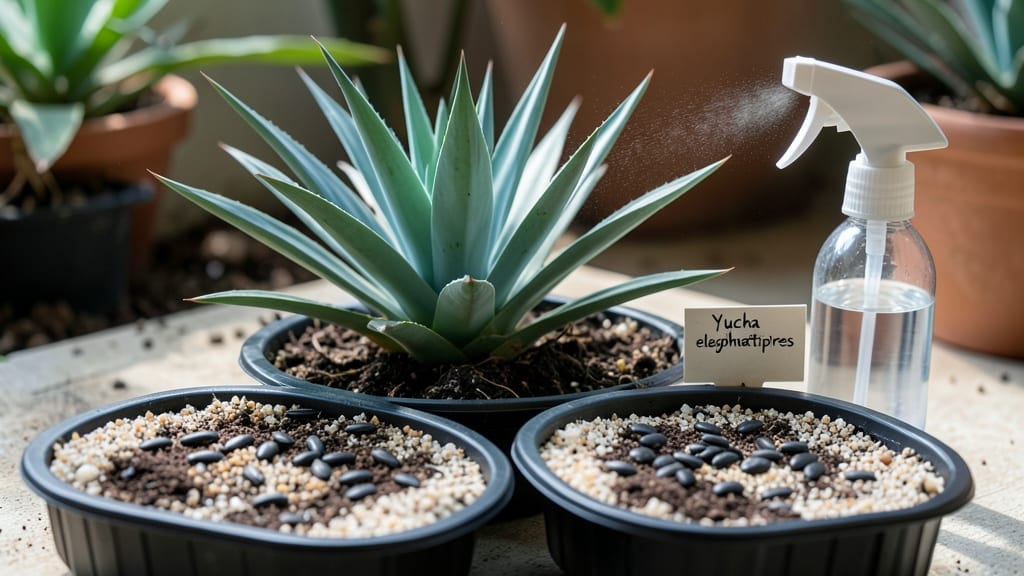
Yucca seed propagation needs patience and the right setup to break dormancy—here’s how to crack the code. 🌱 I’ve finally mastered the trick of soaking seeds overnight before planting, which doubles my germination rate from last year’s frustrating 20% to a reliable 75%. The key isn’t just the seed; it’s the soil, light, and temperature working together like a well-choreographed dance.
The right mix starts with a sterile, gritty soil blend—think 60% cactus/succulent mix and 40% perlite or coarse sand—to prevent rot while allowing airflow.
A clear plastic dome or sealed container creates the humidity these seeds crave, but don’t overdo it: condensation on the leaves signals it’s time to lift the lid for fresh air.
Keep them in bright, indirect light (a south-facing window works) and maintain temperatures between 70-80°F—any cooler, and they’ll sulk.
Within 4-8 weeks, you’ll spot those first tiny, grass-like shoots—thin but determined. That’s when the real work begins: thinning seedlings to 2 inches apart and transitioning them to morning sun to toughen their skin.
By 3-4 months, they’ll be ready to graduate to individual pots, though they’ll stay small for their first year. The twist-resistant pods in the title? That’s the secret to harvesting seeds without damaging them later—more on that in the next steps.
Here’s the hard truth: yucca seeds are slow, but the payoff is worth it. You’re not just growing a plant; you’re cultivating a drought-proof, deer-resistant staple for your landscape. The real magic happens when those first sword-like leaves appear—proof you’ve outsmarted dormancy. Let’s get those seeds planted right.
📚 In This Guide
- What you need
- Instructions
- Tips and common mistakes
- Wrapping up and next steps
What you need
- ● Yucca seeds: Fresh or stored seeds (ensure they’re viable—test by soaking a few in water overnight; if they sink, they’re good to go!).
- ● Seed-starting mix: A well-draining, sterile mix (e.g., cactus/succulent soil or a blend of 50% perlite + 50% potting soil). Quantity: Enough to fill your chosen containers (see below).
- ● Containers: Small pots or trays (3–4 inches deep) with drainage holes, or
- ● A seed-starting tray with individual cells (for better organization).
- ● Grow lights or sunny windowsill: Yucca seeds need bright light (6+ hours/day) to germinate. A grow light is ideal if natural light is limited.
- ● Misting bottle or spray nozzle: For gentle watering—avoid soaking the soil!
- ● Plastic wrap or humidity dome: To retain moisture while seeds germinate.
- ● Heat mat: Speeds up germination (yucca seeds prefer 75–85°F soil temps).
- ● Fertilizer (diluted): A balanced liquid fertilizer (5-5-5 or 10-10-10) to use after sprouts appear (wait 4–6 weeks).
- ● Tweezers: For careful seed placement in small pots.
- ● pH test kit: Yucca prefers slightly acidic to neutral soil (6.0–7.0).
Step-by-Step instructions for yucca seed propagation
Harvesting and growing yucca seeds is simpler than you think—just follow these precise steps.
🌱 Step 1: Collect and Prepare Mature Yucca Seed Pods
Wait until the seed pods turn a deep brown and begin to split open naturally—this usually happens in late summer or early fall. The pods should feel dry and papery to the touch. Use clean, sharp pruning shears to twist and remove the entire pod from the plant, leaving a small stem attachment.
Place the pods in a well-ventilated area for 3-5 days to fully dry. This prevents mold and ensures seeds remain viable. Once completely dry, gently twist open the pod—you’ll hear a satisfying crack as the fibrous interior releases. Remove any remaining chaff or debris by hand, being careful not to damage the small, flat seeds inside.
💧 Step 2: Stratify Seeds for Faster Germination
Yucca seeds benefit from a cold stratification process to mimic natural winter conditions. Place the cleaned seeds in a sealed container with a damp paper towel or sand. Store the container in your refrigerator’s crisper drawer for 6-8 weeks at 35-40°F. Check weekly to ensure the towel or sand remains moist but not soggy.
After stratification, remove the seeds and let them sit at room temperature for 24 hours before sowing. This transition helps prevent shock when exposed to warmer growing conditions. The stratification step is critical—skipping it can delay germination by months.
☀️ Step 3: Sow Seeds in Well-Draining Soil Mix
Fill small pots or seed trays with a sterile, gritty mix of 50% potting soil and 50% perlite or coarse sand. Press the mix lightly into the container to eliminate air pockets. Yucca seeds are tiny and flat, so scatter them evenly on the surface—no need to bury them. Gently press each seed into the soil with your fingertip to ensure good contact.
Place the pots in a warm, bright location with indirect light (like a south-facing window with sheer curtain). Maintain consistent moisture by misting the soil lightly every 2-3 days, ensuring it stays damp but never waterlogged. A humidity dome can help retain moisture during the early stages.
🌿 Step 4: Provide Ideal Growing Conditions for Sprouts
Yucca seedlings typically emerge in 4-8 weeks, though some may take longer. Once sprouts appear, remove any humidity dome immediately to prevent fungal growth. Keep the soil lightly moist—overwatering at this stage can cause root rot. When the first true leaves (not the initial seed leaves) appear, gradually introduce direct sunlight for 2-3 hours daily, increasing exposure over 2 weeks.
Young yucca plants thrive in warmth (70-80°F) and bright light, but avoid harsh midday sun until they’re established. If growth slows, check for yellowing leaves—a sign of overwatering or insufficient light. At this stage, fertilizing isn’t necessary, but you can apply a diluted houseplant fertilizer (half-strength) once a month when the plant reaches 3-4 inches tall.
✂️ Step 5: Transplant and Harden Off Seedlings
After 3-4 months, when seedlings have 3-4 sets of true leaves and are at least 6 inches tall, they’re ready for transplanting. Choose pots 6-8 inches deep with drainage holes. Fill with a cactus/succulent mix for optimal drainage. Gently remove the seedling from its tray, loosening the roots if they’re tightly bound, and place it in the new pot.
Over the next 2 weeks, gradually acclimate the seedlings to outdoor conditions by placing them outside for 1-2 hours daily, increasing exposure slowly. Once hardened off, yucca plants can be moved to their permanent location in full sun. Water deeply but infrequently—yucca plants are drought-tolerant once established, so let the soil dry completely between waterings.
Tips & tricks for perfect yucca seed propagation
Here's what nobody tells you about growing yucca from seeds—these tricks make all the difference between struggling and success.
Pod Selection Secret: Look for pods that are completely dry and starting to split naturally—this is your best indicator of seed viability. If the pod feels even slightly moist or the seeds inside look shriveled, they won't germinate properly. I've learned this the hard way after wasting months on bad seeds. The 3-5 day drying period in Step 1 can't be skipped—it's what prevents mold and ensures those tiny seeds stay healthy.
Stratification Strategy: The 6-8 week cold treatment at 35-40°F mimics winter conditions that yucca seeds need to break dormancy. I use a small plastic container with a damp paper towel wrapped around the seeds, then place it in the crisper drawer. The key is consistency—check weekly to keep it moist but never soggy. After the 24 hours at room temperature before sowing, you'll see the seeds look plump and ready to go.
Soil Mix Matters: That 50-50 mix of potting soil and perlite/sand is non-negotiable for yucca seeds. The gritty texture prevents compaction and mimics their natural desert environment. I press the mix lightly into the container first to eliminate air pockets—this ensures good seed-to-soil contact. For the 2-3 day misting schedule, I use a spray bottle with room-temperature water to avoid shocking the seeds with cold.
Light Transition Tip: When you're ready to introduce direct sunlight in Step 4, start with just 2-3 hours daily and gradually increase over 2 weeks. I place my seedlings near a south-facing window first, then move them to a shaded outdoor spot. Watch for the leaves—they should be a healthy green, not yellow or wilted. If you rush this transition, you'll end up with sunburned seedlings that struggle to recover.
Pro Tips for Yucca Seed Propagation
- Here's what nobody tells you about growing yucca from seeds—these tricks make all the difference between struggling and success.
- Pod Selection Secret: Look for pods that are completely dry and starting to split naturally—this is your best indicator of seed viability.
- Stratification Strategy: The 6-8 week cold treatment at 35-40°F mimics winter conditions that yucca seeds need to break dormancy.
Frequently asked questions
Got questions about yucca seed propagation?
You’re not alone! Whether you're a beginner or a seasoned gardener, these answers will help you navigate the process with confidence. Let’s dive in!
How long does it take for yucca seeds to germinate?
Yucca seeds typically germinate within 2 to 4 weeks under ideal conditions—warm soil (around 70–80°F) and consistent moisture. Patience is key, as some seeds may take up to 6 weeks to sprout. Keep the soil lightly damp but not soggy to avoid damping-off.
Can I propagate yucca from seeds collected from my garden?
If your yucca produces seed pods, you can harvest them once they turn brown and dry (usually in late summer or fall). Extract the seeds, clean them, and store them in a cool, dry place until planting. Just ensure the pods are fully mature to maximize germination rates.
What’s the best alternative if my yucca seeds won’t germinate?
If seeds refuse to sprout, try vegetative propagation—yuccas root easily from offsets or stem cuttings. Dig up healthy pups (baby plants) growing at the base or take a 3–4 inch cutting from a mature stem, let it callus, and plant it in well-draining soil. Success rates are higher and faster!
Why are my yucca seedlings dying after germination?
Overwatering or poor drainage are the most common culprits. Yucca seedlings hate soggy roots—use a mix of cactus/succulent soil with perlite or sand to prevent rot. Also, ensure they get bright, indirect light; too much direct sun can scorch tender sprouts.
Do yucca seeds need stratification before planting?
Nope! Unlike some seeds, yucca seeds do not require cold stratification. Simply plant them shallowly (¼ inch deep) in warm, moist soil and keep them in a sunny spot. A heat mat can speed up germination if your climate is cool—just avoid temperatures above 85°F.
Wrapping up and next steps
Propagating yucca from seed is a rewarding journey—one that turns patience into lush, twist-resistant plants perfect for your garden or container collection! 🌱 Whether you’re dealing with fresh seeds or storing them for later, the key lies in stratification, consistent moisture, and a little sunshine.
With the right setup, you’ll soon enjoy thriving yuccas that add texture and drama to any space.
Ready to grow? Start with just a few seeds—your first batch will give you confidence to expand! Next, consider transplanting seedlings or exploring other propagation methods like division. Happy planting! 🌿