
Planting
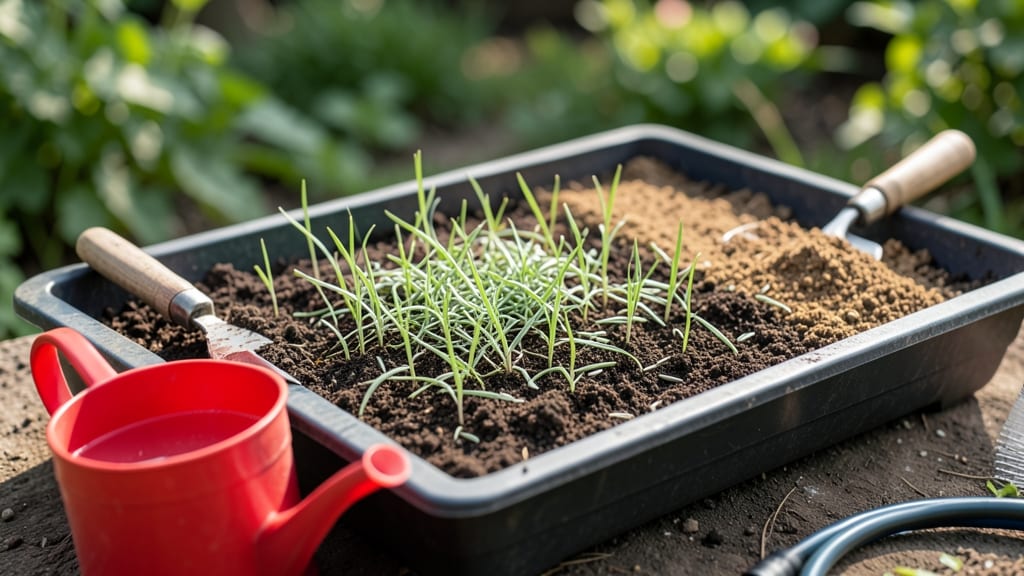
Fall is the perfect time to sow grass seed—cooler temperatures and gentle rain create ideal conditions for thick, lush lawns that outperform spring plantings. 🌱 I’ve seen bare patches transform into vibrant green carpets by spring when seeded in September or October, thanks to fewer weeds and less stress on young roots.
The secret starts with soil prep: loosen the top 2-3 inches, rake out debris, and test pH (aim for 6.0-7.0). Choose a cool-season blend like fescue or ryegrass for your climate, then spread seed evenly at half the rate on the package—fall germination is slower but deeper.
Water lightly twice daily until sprouts appear in 7-14 days.
What you’ll end up with is a lawn that stays green through winter and springs ahead of spring plantings. The roots establish strong before cold sets in, and weeds struggle to compete in the cooler soil.
By next summer, your neighbors will be asking for your "secret"—it’s just smart timing and a little patience.
Works for any lawn size, from small patches to full yards. Here’s how to adapt for drought-prone areas or heavy foot traffic spots—once you try it, you’ll never plant in spring again.
📚 In This Guide
- What you need
- Instructions
- Tips and common mistakes
- Wrapping up and next steps
What you need
- ● High-quality grass seed (choose a cool-season variety like Kentucky bluegrass, fescue, or ryegrass—5–10 lbs per 1,000 sq ft, depending on desired density).
- ● Lawn starter fertilizer (look for a high-phosphorus blend, like 10-20-10, to boost root growth—1 lb per 100 sq ft).
- ● Topsoil or compost (for patchy areas—¼–½ inch layer to improve seed-to-soil contact).
- ● Water source (hose with a gentle spray nozzle or a soaker hose for consistent moisture).
- ● Broadcast spreader (for even seed distribution—manual or drop-type, calibrated to your seed weight).
- ● Rake (bow or leaf) (to loosen soil and smooth the surface—medium-coarse teeth work best).
- ○ Lawn roller (optional but helpful) (for firming seed into soil—lightweight, 50–100 lb model).
- ● Garden gloves & knee pads (because comfort matters when you’re on your hands and knees!).
- ● Pre-emergent herbicide (apply 4–6 weeks before seeding to prevent weeds—if your soil is weed-free, skip this!).
- ● Straw or netting (to protect newly seeded areas from birds—lightweight, biodegradable option).
- ● Soil test kit (to check pH—ideal range for cool-season grass is 6.0–7.0).
- ● Lawn repair mix (for bare spots—seed + mulch blend for convenience).
Step-by-Step instructions for sowing grass seed in fall
Fall planting gives grass seeds the perfect head start—here's how to do it right for a thick, resilient lawn.
🌱 Step 1: Prepare the Soil Before Planting
Start by mowing your lawn as short as possible—about 1 inch high—to create an even surface for seeds. Remove any existing thatch (the spongy layer between grass and soil) by raking or dethatching if it's over ½ inch thick. Thick thatch blocks seed-to-soil contact, preventing germination.
Test your soil's pH with a kit—ideal levels for most grass types are between 5.5 and 7.0. If your soil is too acidic or alkaline, adjust it 2-3 weeks before planting by adding lime (for acidity) or sulfur (for alkalinity). Work the amendments into the top 2-3 inches of soil using a rake or tiller.
💧 Step 2: Spread Seed Evenly and Lightly
Use a broadcast spreader set to the recommended rate for your grass type—typically 5-10 pounds per 1,000 square feet for cool-season grasses. Walk in a crisscross pattern to ensure even coverage. If you're seeding a large area, divide it into sections and mark boundaries to avoid overlapping.
After spreading, lightly rake the seeds into the soil with a stiff-bristled rake, pressing them just enough to make contact with the earth. This prevents seeds from washing away during watering. You'll see tiny furrows in the soil—this is perfect. Avoid burying seeds deeper than ¼ inch, as they need light to germinate.
☀️ Step 3: Water Gently and Consistently
Water immediately after planting to settle the seeds into the soil. Use a gentle sprinkler or soaker hose to apply ¼ inch of water evenly across the area. Keep the soil moist (not soggy) for the first 10-14 days—this is critical for germination. Water lightly twice daily (morning and evening) to maintain moisture without displacing seeds.
You’ll notice the first sprouts in 5-21 days, depending on the grass type and weather. Once seedlings reach 2-3 inches tall, gradually reduce watering to 1 inch per week, encouraging deeper root growth. Avoid heavy foot traffic until the grass is mowed 2-3 times—this prevents damage to tender new roots.
✂️ Step 4: Maintain New Growth Through Fall and Winter
Once your new grass reaches 3-4 inches tall, mow it to 3 inches using a sharp blade. This prevents disease and encourages a denser root system. Avoid mowing when the grass is wet—damp conditions can clog the mower and spread disease.
Continue watering deeply but less frequently as temperatures drop. In colder climates, reduce watering to ½ inch per week once the grass turns dormant. Apply a winter fertilizer (low in nitrogen) in late fall to strengthen roots without promoting top growth. By spring, you’ll have a thick, lush lawn ready to thrive.
Tips & tricks for perfect fall grass seed planting
Here's what I wish I knew before my first fall seeding attempt—these tricks will help you avoid my mistakes and get the best results.
Soil Prep Secret: In Step 1, don't just mow short—consider aerating if your soil feels compacted. Rent a core aerator for $50-$80 a day if needed. Those little holes let seeds make direct contact with soil and improve water penetration. I learned this the hard way after watching seeds wash away during my first watering.
pH Timing Tip: When adjusting soil pH in Step 1, give those amendments the full 2-3 weeks to work before planting. I tried planting right after adding lime and got poor germination because the pH adjustment wasn't complete. Test again right before planting to confirm you're in that 5.5-7.0 range.
Seed Placement Technique: For Step 2, think of your rake strokes as "finger painting"—just enough pressure to create those tiny furrows without compacting the soil. Press too hard and you'll bury seeds deeper than ¼ inch, which blocks light needed for germination. A light touch creates the perfect seed-to-soil interface.
Watering Watch: During the critical 10-14 days in Step 3, check soil moisture by grabbing a handful—it should feel like a damp sponge, not a wet washcloth. I used to overwater, thinking more was better, but soggy soil actually suffocates seeds. Morning watering is especially important as it gives seeds time to dry slightly before evening.
Pro Tips for Sowing Grass Seed In Fall
- Here's what I wish I knew before my first fall seeding attempt—these tricks will help you avoid my mistakes and get the best results.
- Soil Prep Secret: In Step 1, don't just mow short—consider aerating if your soil feels compacted.
- pH Timing Tip: When adjusting soil pH in Step 1, give those amendments the full 2-3 weeks to work before planting.
Frequently asked questions
Got questions about sowing grass seed in fall?
You’re not alone! Here are answers to the most common concerns—so you can tackle your lawn project with confidence.
What’s the best time to sow grass seed in fall?
The ideal window is 4–6 weeks before your first hard frost (typically late August to early October in most U.S. zones). Cooler temps and frequent rain help seeds germinate evenly without drying out. Check your local frost dates or use a seed packet’s recommended timeline for precision.
How long does it take for grass seed to grow in fall?
Germination usually takes 7–21 days, depending on grass type (cool-season varieties like fescue sprout faster than warm-season). Expect visible growth in 2–4 weeks, but full thickness may take 6–12 months. Patience pays off—fall sown seed roots deeply before winter!
Do I need to water differently after sowing in fall?
Yes! Keep soil consistently moist (like a damp sponge) for the first 2 weeks—water lightly 2x daily (morning/evening) to avoid washing seeds away. After germination, reduce to 1 inch per week (including rain). A sprinkler with gentle mist works best.
Can I overseed an existing lawn in fall?
Fall is perfect for overseeding. Mow short, dethatch if needed, and rake to loosen soil. Spread seed evenly, then top with a thin layer of compost or starter fertilizer. This fills thin spots and boosts density—just avoid heavy foot traffic for 2–3 weeks.
How do I keep birds/squirrels from eating my grass seed?
Use seed with a bird repellent (like corn gluten meal) or cover seeds with straw or netting until germination. Scatter seed by hand (not broadcast) to reduce waste. If pests persist, try a temporary wire mesh over small areas—just remove it once sprouts appear!
Will grass seed survive winter if sown too late?
Cool-season grasses (like ryegrass or fescue) can handle light frost, but avoid sowing within 4 weeks of winter. If you miss the window, wait until spring—but expect slower growth. For warm-season grasses (e.g., Bermuda), fall sowing isn’t ideal; opt for spring instead.
Wrapping up and next steps
Fall is your lawn’s golden opportunity—cool weather and fewer weeds make it the perfect time to sow grass seed for a thicker, greener yard next spring. 🌱 By following the right steps—prepping soil, choosing the best seed, and keeping it moist—you’ll set your lawn up for success with minimal effort.
Don’t wait: your future lush lawn starts with this season’s prep!
🚀 Ready to Transform Your Lawn?
Grab your supplies, check the weather, and get planting! For extra tips, bookmark our guide or share your progress with #FallLawnGoals. Happy growing!