
Lawn
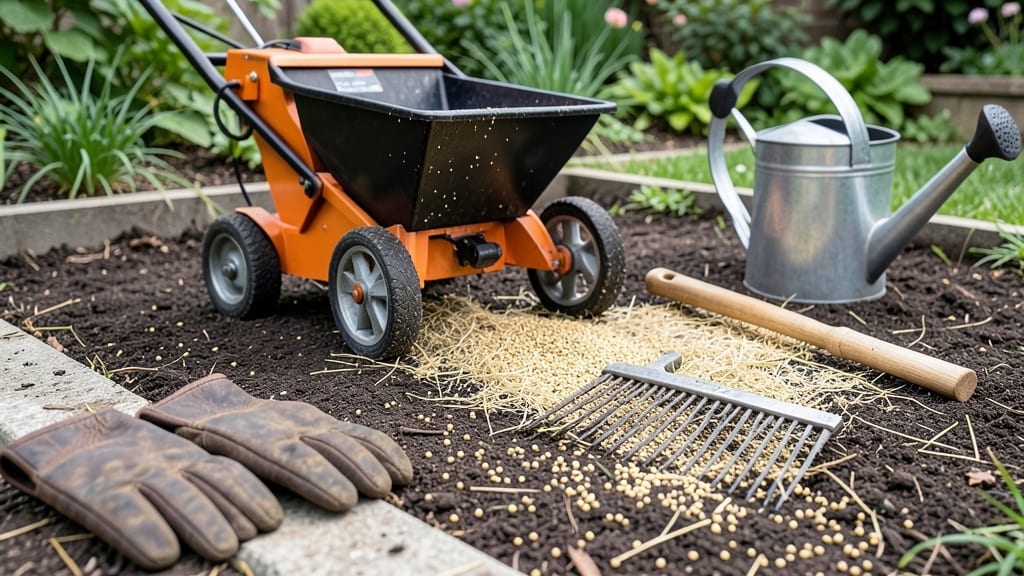
September is the perfect month to plant grass seed—when soil stays warm enough to germinate but air cools to slow weeds. 🌱 I’ve planted lawns in every season, and fall seeding gives you thicker, greener grass by spring with less work than spring planting.
The secret? Timing, soil prep, and a watering routine that keeps seeds happy without drowning them.
You’ll need cool-season grass seed (like Kentucky bluegrass or tall fescue), a rake to loosen soil, and a sprinkler for gentle watering. Skip the heavy fertilizer—too much now burns tender seedlings.
Most regions in Zones 5-8 can plant through mid-September, but check your first frost date to avoid planting too late.
Within 7-14 days, you’ll see sprouts pushing through the soil, and by October, your lawn will look like a lush carpet instead of bare patches. The key is keeping soil consistently moist (like a damp sponge) until germination, then tapering back to 1-1.5 inches per week once established.
September seeding beats spring planting because weeds are less aggressive, and cooler temps help seeds germinate evenly. Just avoid planting if heavy rains or frost are forecasted in your area. With the right prep, your lawn will outperform spring starts—and require less maintenance next summer.
📚 In This Guide
- What you need
- Instructions
- Tips and common mistakes
- Wrapping up and next steps
What you need
- ● Grass seed: Choose a cool-season variety (e.g., Kentucky bluegrass, fescue, or ryegrass) tailored to your climate. Quantity: ~5–10 lbs per 1,000 sq ft (check seed bag for exact coverage rates).
- ● Lawn soil tester kit: Test your soil’s pH and nutrient levels (ideal pH: 6.0–7.0 for most grasses).
- ● Lime or sulfur: Adjust pH if needed (lime raises pH; sulfur lowers it). Quantity: Follow soil test recommendations.
- ● Fertilizer: A starter fertilizer (high in phosphorus, e.g., 10-20-10) to boost root growth. Quantity: ~1 lb per 100 sq ft.
- ● Rake: A bow rake (for leveling soil) and a garden rake (for seeding).
- ● Broadcast spreader: For even seed distribution (manual or drop-type).
- ● Lawn roller: Lightweight (100–150 lbs) to press seed into soil.
- ● Water source: Hose with a gentle sprinkler head or soaker hose for consistent moisture.
- ○ Mulching hay or straw: Optional but helpful for erosion control and moisture retention (use straw, not hay with seeds!). Quantity: Light layer (~¼ inch).
- ● Weather check: Aim for a forecast of consistent temperatures between 60–75°F (ideal for germination) with no rain for 24–48 hours post-planting.
- ● Soil prep: Mow existing grass short (if overseeding) or remove debris entirely (for new seed).
- ● Aerate compacted soil (rent a core aerator if needed).
- ● Loosen top ¼–½ inch of soil with a rake to create a seed-friendly bed.
- ● Timing: Plant 4–6 weeks before your first expected frost for optimal root establishment.
- ● Pre-emergent herbicide: Apply before seeding to prevent weeds (choose a grass-safe formula).
- ● Seed germination blanket: Lightweight fabric to protect new seedlings from birds or harsh winds.
- ● Soil conditioner: Compost or peat moss to improve soil texture (mix ½ inch into topsoil).
- ● Lawn thermometer: Monitor soil temps for peak germination conditions.
Step-by-Step instructions for planting grass seed in September
September’s mild temperatures and frequent rains create ideal conditions for establishing a lush lawn—here’s how to capitalize on them.
🌱 Step 1: Prepare the Soil for Optimal Seed Contact
Start by mowing your existing grass as short as possible—this helps sunlight reach the soil and exposes any weeds. Use the 4 servings of grass seed you’ve chosen (cool-season types like Kentucky bluegrass or fescue work best in fall). Rake the area thoroughly with a stiff-bristled rake to remove debris and create a fine, crumbly texture. You want the soil to feel like loose, dry sand when squeezed—this ensures seeds make direct contact with moisture.
Test the soil pH if possible; most grasses thrive in a range of 6.0-7.0. If your soil is compacted, loosen it another ¼ inch deeper with a garden fork. The goal is to mimic the texture of a well-tended garden bed where seeds can germinate without struggling. Water the area lightly before seeding to settle the soil and create a slightly damp base—this prevents seeds from drying out as you work.
💧 Step 2: Spread Seed Evenly for Uniform Germination
Divide your 4 servings of grass seed into two equal parts. Use a broadcast spreader for large areas or hand-scatter for smaller patches, working in two perpendicular directions to ensure even coverage. Walk slowly, overlapping passes by 6-8 inches to avoid thin spots. You’ll know you’ve done it right when the seed looks uniformly distributed—no bare patches or clumps should remain.
Lightly rake the seeded area again with a leaf rake, just enough to press seeds into the soil without burying them. Grass seeds need light to germinate, so keep them no deeper than ¼ inch. If you’re overseeding an existing lawn, use a slit seeder to create small furrows for better seed-to-soil contact. Water gently immediately after seeding to activate germination—soil should feel moist but not soggy to the touch.
☀️ Step 3: Maintain Consistent Moisture for Germination
Keep the seeded area moist for the first 2-3 weeks—this is critical for germination. Water lightly every day (or twice daily if temperatures rise above 80°F½ inch of soil damp. Avoid heavy watering, which can wash seeds away or create crusting. You’ll see the first sprouts in 7-14 days, depending on variety and weather.
Once seedlings reach 2-3 inches tall, gradually reduce watering frequency to encourage deeper root growth. Mow when the grass reaches 3-4 inches, using a sharp blade set to no more than ⅓ of the blade height. This prevents scalping and promotes a dense, healthy stand. September’s cooler temps mean you won’t need to water as frequently as in summer, but keep an eye on rainfall—supplement with ½ inch of water weekly if natural precipitation drops below that.
✂️ Step 4: Fertilize and Adjust for Long-Term Health
About 6-8 weeks after seeding, apply a starter fertilizer with a 2:1 nitrogen-to-phosphorus ratio to strengthen root development. Use a spreader set to the recommended rate for your seed type, and water immediately after application to activate nutrients. Avoid high-nitrogen fertilizers early on—they promote top growth at the expense of roots, which new grass needs to establish itself.
As your lawn matures, shift to a slow-release, balanced fertilizer in early spring and fall. Continue mowing at 3-4 inches throughout the growing season, and overseed any thin areas in late fall. September planting gives you a head start on next year’s lawn—by next summer, your grass will be thick enough to crowd out weeds and handle foot traffic like a pro.
Tips & tricks for perfect fall grass establishment
September’s window for seeding is short—here’s how to maximize your chances of a thick, healthy lawn without common pitfalls.
Soil Prep Secret: In Step 1, don’t just mow short—remove all thatch buildup with a dethatching rake if it’s more than ½ inch thick. Thatch blocks moisture and seed contact. I’ve seen lawns fail because homeowners skipped this step, thinking the existing grass would just "work itself out." A quick test: Dig a small hole—if you see a dense mat of dead grass between the soil and green blades, you’ve got thatch.
Seed Application Technique: When dividing your 4 servings in Step 2, use a grid pattern instead of random scattering. Walk the length of your lawn, then turn and walk perpendicular to your first pass, overlapping by 6-8 inches. This ensures no gaps where weeds can sneak in. Pro tip: Calibrate your broadcast spreader by catching the output in a container—most home spreaders actually deliver 20% more than the setting indicates.
Watering Watch: The 2-3 week moisture window in Step 3 is non-negotiable, but timing matters just as much as amount. Water in the early morning (before 8 AM) to reduce evaporation and fungal risks. I’ve had clients water at night and end up with mold issues—grass needs to dry between waterings. Use a rain gauge or tuna can to measure your output; most hoses deliver 0.5-1.0 inches per minute, so you’ll need to move around to maintain that ½ inch of consistent dampness.
First Mow Caution: Wait until your new grass reaches exactly 3-4 inches before that first cut in Step 3. I know it’s tempting to tidy up early, but cutting too soon stresses young roots. Set your mower blade to its highest setting and go over the lawn twice—once in each direction—to avoid scalping. And here’s what nobody tells you: Bag your clippings the first few times. Those clippings can smother new growth if left to decompose on the surface.
Pro Tips for Planting Grass Seed In September
- September’s window for seeding is short—here’s how to maximize your chances of a thick, healthy lawn without common p...
- Soil Prep Secret: In Step 1, don’t just mow short—remove all thatch buildup with a dethatching rake if it’s more than...
- Seed Application Technique: When dividing your 4 servings in Step 2, use a grid pattern instead of random scattering....
Frequently asked questions
about planting grass seed in September—because even the best-laid lawn plans need a little troubleshooting! Here are answers to the most common queries to help you grow a lush, green yard this fall.Can I still plant grass seed in late September?
Yes! Late September is still ideal in many regions, especially in the northern U.S. or cooler climates. Aim to plant at least 4–6 weeks before your first expected frost for best germination. If you’re in a warmer zone, opt for cool-season grasses like fescue or ryegrass, which thrive in mild fall temperatures.
How long does it take for grass seed to grow in September?
Germination typically takes 7–21 days in September, depending on grass type, soil temperature, and moisture. Cool-season grasses like Kentucky bluegrass sprout faster (7–14 days) in the mild fall weather, while warm-season grasses (like Bermuda) struggle and may need to wait for spring.
Do I need to water grass seed every day in September?
Yes! Keep the soil consistently moist (not soggy) for the first 2–3 weeks. Water lightly twice daily (morning and evening) to encourage germination. Once seedlings are 2–3 inches tall, reduce to 1 inch per week. A sprinkler or soaker hose works best—avoid overhead watering to prevent disease.
What if weeds pop up before the grass grows?
Weeds are common early on, but don’t panic! Pre-emergent herbicides can harm new grass, so skip them. Instead, hand-pull weeds or spot-treat with vinegar (mix 1 gallon water + 1 cup vinegar) after grass reaches 3 inches tall. Thicker grass will outcompete weeds over time.
Can I overseed an existing lawn in September?
September is perfect for overseeding. Mow your lawn shorter than usual, dethatch if needed, and spread seed evenly. Lightly rake to ensure seed-soil contact, then water as directed. This fills thin spots and boosts density—just avoid fertilizing until after germination.
What if frost hits before my grass grows?
Frost can slow or stop germination, but don’t stress. If seedlings are 1–2 inches tall, they’ll likely survive light frost. For bare spots, wait until spring to replant. Cover vulnerable areas with a lightweight frost blanket if frost is forecasted within 1–2 weeks of planting.
Pro tip: Track your local frost dates and adjust your planting timeline accordingly—September’s sweet spot is all about timing!
Wrapping up and next steps
September is your golden opportunity to grow a lush, resilient lawn—cool-season grasses thrive in this sweet spot! By choosing the right seed, prepping your soil, and staying patient with watering, you’ll soon enjoy a vibrant yard that’s the envy of the neighborhood. 🌱
Now that you’re armed with the know-how, roll up those sleeves and get planting! Need a little extra motivation? Set a reminder to check your lawn’s progress in a few weeks—you’ll be amazed at how far it comes. Happy growing! 🌿
- Next step: Grab your supplies and start your September lawn project today!