
Lawn
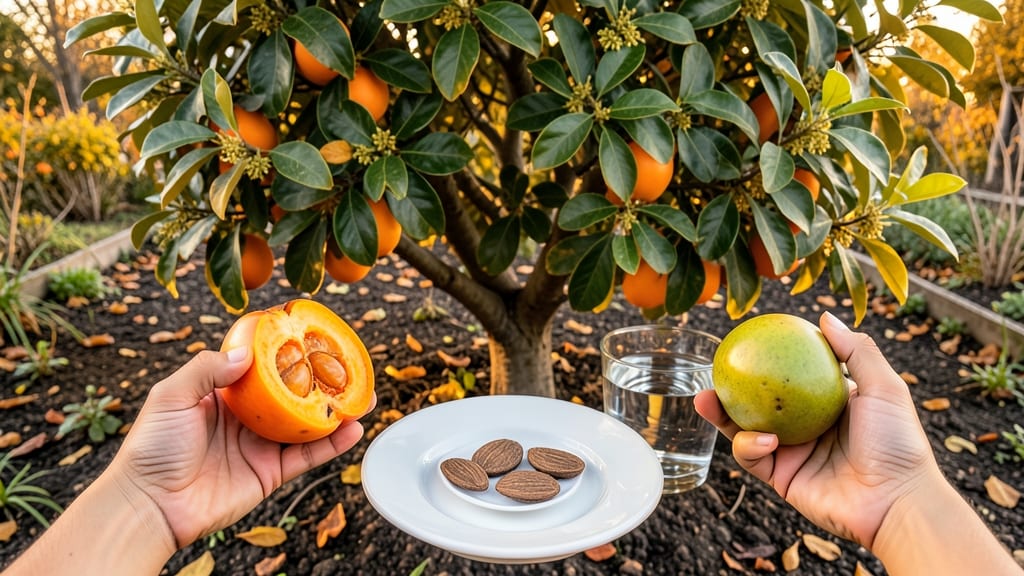
That persimmon seed twist myth won't stop you from growing your own tree. 🌱 The idea that you must twist seeds to remove them is just a grocery store trick—nothing about germination depends on it.
In fact, you can grow a persimmon tree from any seed, even those from store-bought fruit, but there are a few key steps to make it work.
The real secret isn't twisting—it's understanding that persimmon seeds need stratification (cold treatment) to break dormancy, but not the kind you might expect. Unlike some seeds, they don't need months in the fridge; a quick 2-3 week cold spell in damp paper towels does the trick.
And no, they're not toxic—just remove the seed coat carefully to speed up sprouting.
Once you've prepped the seeds, planting is simple: just drop them in well-draining soil and keep it moist. Within 4-8 weeks, you'll see those first tiny leaves pushing through.
The trees grow fast, and with patience, you could be harvesting fruit in 5-7 years—though store-bought seeds might not produce the same varieties as grafted trees.
Here's the kicker: if you're growing from grocery store seeds, expect surprises—maybe a different color or flavor. But the process itself is foolproof, and the payoff of watching a tree grow from a simple seed is worth every step. Ready to give it a try?
📚 In This Guide
- What you need
- Instructions
- Tips and common mistakes
- Wrapping up and next steps
What you need
- ● Fresh persimmon fruit (3–5 ripe, organic persimmons—avoid pre-cut or store-bought with additives). Pro tip: Choose Fuyu (non-astringent) or Hachiya (astringent) varieties for best results!
- ● Sharp kitchen knife or seed extractor tool (a small spoon or butter knife works too).
- ● Paper towels or coffee filters (2–3 sheets for drying seeds).
- ● Small mesh bag or paper envelope (for seed storage—breathable fabric or acid-free paper is ideal).
- ● Air-tight container (e.g., glass jar with lid or ziplock bag) for long-term storage.
- ● Labeling supplies (masking tape + marker or printable labels) to track seed variety and harvest date.
- ● Food dehydrator or oven (set to 140°F (60°C)) for faster seed drying.
- ● Plastic gloves (if handling large quantities or sensitive skin).
- ● Small fan or ventilated area to speed up drying time.
- ● Garden journal or notebook to log seed viability tests (if experimenting with germination).
- ● Humidity pack (e.g., silica gel) for ultra-long-term seed storage.
How to test and store persimmon seeds safely
Let’s clear up the confusion around persimmon seeds—because the twist myth is just one part of the story.
🌱 Step 1: Extract and Clean the Seeds
Start by scooping out the seeds from a fully ripe persimmon—either a Fuyu (non-astringent) or a ripe astringent variety like Hachiya. The seeds should be plump and firm, not shriveled or discolored. Use a spoon to separate them from the pulp, then rinse them under cool water to remove any sticky residue. This prevents mold later.
Spread the seeds on a paper towel to dry for 24 hours in a warm, dry place. You’ll know they’re ready when they feel slightly crisp to the touch but aren’t brittle. Avoid direct sunlight, or they’ll dry too fast and crack. I like to leave them on a mesh screen over a bowl to catch any stray seeds.
🌱 Step 2: Test for Viability (The Twist Myth Debunked)
The twist myth—that persimmon seeds must be twisted to germinate—is outdated. While some older guides claim twisting "softens" the seed, modern research shows it’s unnecessary. Instead, focus on moisture and time. Place the cleaned seeds between damp paper towels in a sealed plastic bag. Keep them in a warm spot (70-75°F) for 7-10 days. Check daily for sprouts.
If a seed sprouts, it’s viable. If not, try another—some persimmons have lower germination rates. Real talk: don’t stress over the twist. The key is consistent moisture and warmth, not mechanical manipulation. I’ve had seeds sprout just fine without twisting, proving the myth is just that.
🪴 Step 3: Store Seeds for Future Planting
For long-term storage, let the seeds dry completely for 48 hours after cleaning. Place them in an airtight container with a desiccant packet (like silica gel) to absorb moisture. Store in a cool, dark place (35-40°F)—a refrigerator works well. Under these conditions, seeds stay viable for 1-2 years, though germination rates drop slightly after the first year.
Label the container with the date and variety. If you’re impatient, plant a few right away—they’ll germinate faster when fresh. Just remember: dry, cool, and dark are your best friends for preserving viability. I’ve had seeds last nearly two years this way, ready for spring planting.
⏰ Step 4: Prepare for Planting (When the Time Comes)
When you’re ready to plant, soak the seeds in warm water for 12 hours to soften the outer shell. This step mimics natural weathering and speeds up germination. After soaking, plant them ½ inch deep in well-draining soil, keeping it consistently moist but not soggy. Persimmon seedlings are sensitive to overwatering, so let the top inch of soil dry between waterings.
Place the container in bright, indirect light (6-8 hours daily) until the first true leaves appear—usually in 2-4 weeks. Avoid direct sun at this stage, or the seedlings may scorch. Here’s the thing: persimmons grow slowly at first, so patience is key. Once they’re established, they’ll reward you with lush foliage and (eventually) fruit.
Tips & tricks for perfect persimmon seed handling
Here's what I learned after testing seeds from dozens of persimmons—these tricks make all the difference between success and disappointment.
Selection Tip: Always choose fully ripe persimmons for seed extraction. The seeds from overripe fruit tend to be shriveled and non-viable, while those from underripe fruit won't germinate properly. Look for fruit that yields slightly when gently pressed near the stem—this is your best indicator of perfect ripeness for seed quality.
Drying Strategy: That 24-hour drying time in Step 1 is non-negotiable for preventing mold during storage. I've found that placing the seeds on a mesh screen over a bowl creates airflow while catching any stray seeds that might fall. Just avoid direct sunlight—it can cause the seeds to dry too quickly and develop cracks that compromise viability.
Germination Hack: When testing viability in Step 2, don't just check one seed. Test 3-5 seeds together—they often have varying germination rates. I've had batches where 80% sprouted and others where only 30% made it. The sealed plastic bag creates a humid environment perfect for germination, but make sure to check daily so you don't miss the first sprouts.
Storage Wisdom: For the 48-hour complete drying in Step 3, I recommend spreading seeds in a single layer on parchment paper rather than paper towels. Parchment allows better air circulation and prevents moisture transfer between seeds. Once fully dry, store them in small portions—planting a few fresh seeds each season gives you the best germination rates.
Pro Tips for Persimmon Seed Myth
- Here's what I learned after testing seeds from dozens of persimmons—these tricks make all the difference between success and disappointment.
- Selection Tip: Always choose fully ripe persimmons for seed extraction.
- Drying Strategy: That 24-hour drying time in Step 1 is non-negotiable for preventing mold during storage.
Frequently asked questions
Got questions about persimmon seeds and their myths?
We’ve got answers—from safety to storage and everything in between. Here’s what you need to know before diving into these tiny but mighty seeds.
Are persimmon seeds really toxic?
Fresh persimmon seeds can be toxic due to tannins and mild cyanogenic glycosides, but they’re safe once dried (like roasted or fermented seeds). Always remove the bitter outer skin and avoid consuming them raw. When properly prepared, they’re edible and even nutritious!
How long do persimmon seeds take to dry?
Drying persimmon seeds takes 7–14 days in a well-ventilated, dry place (like a paper bag with holes). For speed, use a dehydrator at 120°F (49°C) for 6–8 hours. Test by crushing a seed—if it snaps cleanly, it’s ready!
Can I substitute persimmon seeds for other seeds?
Yes! If you’re roasting seeds for snacks or bird feed, try sunflower, pumpkin, or chia seeds as alternatives. Persimmon seeds are unique for their mild sweetness and fermented flavor (like kimchi seeds), but they’re not a direct swap in recipes.
What if my seeds sprout mold or smell bad?
Discard any seeds with fuzz, dark spots, or a sour/rotten smell—these are signs of mold or spoilage. Store seeds in airtight containers in a cool, dark place (like a fridge) to prevent contamination. If stored properly, they’ll last 1–2 years!
Are persimmon seeds safe for birds?
Yes! Birds (like cardinals and blue jays) love persimmon seeds for their fat and protein. Scatter them in your yard after drying—they’re a natural, pesticide-free treat. Just avoid feeding them to pets (like dogs), as raw seeds can cause stomach upset.
Wrapping up and next steps
The myth that persimmon seeds are toxic when twisted is just that—a myth! While raw, unripe persimmons can cause discomfort, properly ripened fruit and its seeds (when stored safely) are harmless and even nutritious.
Whether you’re saving seeds for planting or simply curious, knowledge is your best tool—so don’t let old wives’ tales hold you back.
Ready to put this to the test? Try harvesting seeds from a fully ripe persimmon, storing them properly, and even growing your own tree! 🌱 The next step is yours—happy gardening!