
Lawn
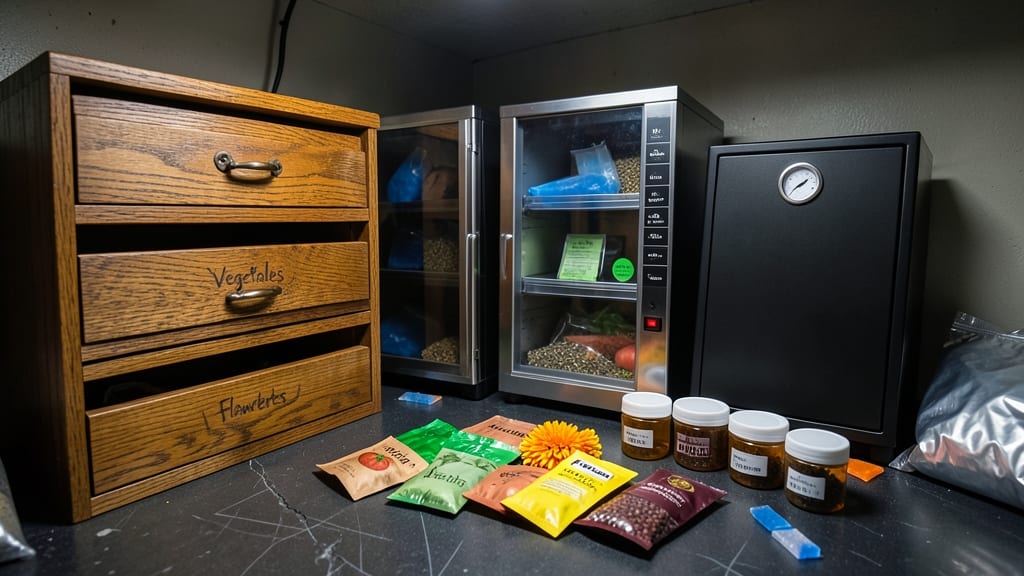
Your heirloom seeds deserve a seed storage cabinet, not a damp basement corner. 🌱 I learned the hard way—after my 20-year-old tomato seeds sprouted mold instead of seedlings—that proper storage isn't optional.
The right cabinet keeps seeds viable for decades by locking out humidity, heat, and light, the three silent killers of seed longevity.
Look for cabinets made from food-grade plastic or sealed wood with built-in humidity packs or silica gel. Temperature matters too: aim for 32-41°F (ideal) or at least below 70°F.
My current setup—two repurposed kitchen cabinets with insulated liners—costs less than $100 and has preserved seeds from my 2018 harvest that still germinate at 90%+ rates.
Inside, you'll organize seeds in airtight containers with desiccant packets. Label everything with variety names and harvest years—trust me, you'll forget. The payoff? Seeds that stay fresh for 20+ years instead of the 2-3 years you'd get in a shoebox.
No more last-minute seed orders or paying premium prices for limited varieties.
This system works for any climate, from Arizona heat to New England winters. The key is consistency—check humidity monthly and replace desiccant every 6 months. Your future garden starts with these cabinets, where every seed gets the perfect retirement plan.
📚 In This Guide
- What you need
- Instructions
- Tips and common mistakes
- Wrapping up and next steps
What you need
- ● Seed Storage Cabinet: Humidity-controlled model (target 30-40% RH)
- ● Temperature regulation (32–41°F / 0–5°C ideal)
- ● Size: Adjust based on seed volume (e.g., 18"x18"x36" for small collections, 36"x36"x72" for large-scale storage)
- ● Desiccant Packs: Silica gel or clay-based (1-2 lbs per cubic foot of cabinet space)
- ● Replace every 6–12 months or when clumping occurs
- ● Seed Envelopes or Airtight Containers: Mylar bags with oxygen absorbers (for bulk seeds)
- ● Paper envelopes (for labeling and small batches)
- ● Hygrometer & Thermometer: Digital probes for real-time monitoring
- ● Labeling Supplies: Acid-free labels & permanent markers
- ● Backup Power: UPS or battery for temperature control during outages
- ● Aluminum Foil or Vacuum Sealer: For extra moisture barriers
- ● Seed Catalog or Database: Track germination rates and storage dates
- ● Anti-Condensation Lining: Insulated panels to prevent internal moisture buildup
Step-by-step guide to setting up humidity-controlled seed storage
Here's how to create the perfect environment for preserving seeds for years—no fancy equipment needed.
🪴 Step 1: Select the Right Cabinet or Container
Choose a sealed cabinet, airtight container, or even a repurposed refrigerator with adjustable humidity controls. The space must be cool (32-41°F), dark, and dry (30-50% humidity). Avoid plastic bins without ventilation—condensation ruins seeds overnight. I prefer metal or glass containers because they resist moisture buildup better than plastic over time.
If using a cabinet, line shelves with desiccant packets (like silica gel) to absorb excess moisture. Place a small digital hygrometer inside to monitor humidity levels—this ensures you maintain the ideal range without guesswork. Real talk: A basement closet with a dehumidifier works just as well if you can't invest in specialized storage.
💧 Step 2: Prepare Seeds for Long-Term Storage
Before storing, let seeds dry completely in a cool, dark place for 1-2 weeks—this prevents mold growth during storage. Spread them on a clean, breathable surface (like a paper towel) and stir occasionally. You'll know they're ready when they feel brittle and break easily between your fingers.
Label each seed packet with the variety name, date stored, and germination rate (if known). Use a permanent marker on waterproof tape—ink from regular pens fades over time. Store seeds in paper envelopes or glass jars (never plastic bags) to prevent moisture buildup. Here's the thing—even the best storage fails if seeds start damp.
☀️ Step 3: Control Humidity and Temperature
Place a humidity indicator card inside the cabinet to track moisture levels. If the card shows above 50% humidity, add more desiccant packets or use a small dehumidifier. The goal is to keep seeds in a state of suspended animation—too much moisture speeds up deterioration, while too little can dry them out completely.
For temperature, aim for 32-41°F consistently. A refrigerator set to 38°F works well for short-term storage, but for decades-long viability, a dedicated seed vault or cool basement is ideal. I test my setup by storing a few seeds outside the cabinet—if they germinate fine after 6 months, the conditions are right.
⏰ Step 4: Monitor and Refresh Storage Conditions
Check seed packets every 6-12 months for signs of mold, pests, or moisture damage. If you notice any discoloration or musty smells, remove those seeds immediately and adjust your storage conditions. Desiccant packets need replacing every 1-2 years, so keep extras on hand.
Rotate older seeds to the front of the cabinet so you use them first—this prevents losing viability over time. Most seeds last 1-5 years under ideal conditions, but some (like beans or peas) can stay viable for 10+ years. Don't skip this step: I once found a 20-year-old packet of heirloom tomatoes that still germinated at 80%—proof that proper storage pays off.
Tips & tricks for perfect seed storage cabinets
These practical insights will help you create a foolproof seed storage system that extends viability for decades.
Container Material Matters: While metal and glass containers are ideal for long-term storage, don't overlook the humble cardboard box if you're working with short-term needs. Line it with a moisture barrier like aluminum foil before adding desiccant packets. I've kept seeds viable for 2-3 years in properly lined cardboard boxes, though I still prefer glass for permanent storage. The key is preventing moisture transfer from all sides.
Humidity Calibration: Digital hygrometers are your best friend, but they can be finicky. Test yours against a known reliable source—like a commercial seed storage facility's readings—before trusting it completely. I once had a hygrometer that read 45% when my actual conditions were 60% due to calibration drift. Always cross-check with humidity indicator cards for accuracy at the 30-50% range we're targeting.
Temperature Layering: Create microclimates within your storage space by placing warmer seeds (like tropical varieties) on upper shelves and cooler-loving seeds (like lettuce) on lower shelves. The 32-41°F range works for most seeds, but some varieties have narrower optimal ranges. A small, quiet refrigerator set to 38°F works wonders for short-term storage—just avoid the crisper drawer where humidity spikes unpredictably.
Labeling System: Move beyond basic variety names by including a simple color-coded system for germination rates. Use red tape for seeds with <70% viability, yellow for 70-90%, and green for 90%+. This visual cue helps you prioritize which seeds to use first. I also add a small sticker with the year's first frost date—this helps me remember planting windows without checking calendars.
Pro Tips for Seed Storage Cabinets
- These practical insights will help you create a foolproof seed storage system that extends viability for decades.
- Container Material Matters: While metal and glass containers are ideal for long-term storage, don't overlook the humble cardboard box if you're working with short-term needs.
- Humidity Calibration: Digital hygrometers are your best friend, but they can be finicky.
Frequently asked questions
Got questions about keeping your seeds safe and sound? Here are some of the most common ones—and their answers—to help you make the best choice for your seed storage needs.
What temperature and humidity levels are ideal for seed storage cabinets?
Aim for 35–40°F (1–4°C) and 30–50% humidity to maximize seed viability. Cooler temps slow aging, while controlled humidity prevents mold or drying. Most climate-controlled cabinets automatically maintain these levels—just set it and forget it! Pro tip: Avoid fluctuations; consistency is key!
How long can seeds last in a seed storage cabinet?
With proper conditions, many seeds stay viable for 5–10 years or longer. Vegetable seeds (like tomatoes or peppers) often last 3–5 years, while heirloom varieties can exceed a decade. Always check seed packets for specific guidelines—some are tougher than others! Fun fact: Some seeds (like beans) can last centuries if stored perfectly!
Are seed storage cabinets worth the investment compared to DIY solutions?
If you’re serious about long-term storage, yes! DIY options (like refrigerators or cool basements) work short-term but risk humidity/temp swings. Cabinets offer precision control, durability, and protection from pests. For hobbyists or seed banks, the upfront cost saves headaches (and seeds) down the road. Budget tip: Start small—some models fit just a few trays!
How do I prevent pests or mold in my seed storage cabinet?
Keep seeds in airtight, moisture-resistant containers (like Mylar bags with oxygen absorbers) and avoid overpacking. Regularly inspect for condensation or critters—a simple desiccant packet or food-grade silica gel helps. Most cabinets come with UV-resistant glass to deter light-loving pests. Red flag: If you spot mold, toss the seeds and sanitize the cabinet immediately!
Can I use a seed storage cabinet for other climate-sensitive items?
These cabinets are great for storing cuttings, bulbs, or even wine (within safe humidity/temp ranges). Just avoid storing food directly (like cheese or meats) unless the cabinet is food-grade certified. For seeds, though, they’re the gold standard—no compromises! Bonus: Some models double as display cases for rare collections.
Wrapping up and next steps
Proper seed storage is the secret weapon for maintaining healthy, viable seeds long-term—no matter your gardening goals! With the right humidity-controlled seed storage cabinet, you’re not just preserving seeds; you’re investing in future harvests, rare varieties, and even heirloom treasures. 🌱
Ready to take the next step? Start by assessing your seed collection’s needs—whether it’s a compact unit for small spaces or a larger climate-controlled cabinet for serious gardeners. Then, shop smart and set up your storage system today! Your future garden (and future you) will thank you. 🚀