
Lawn
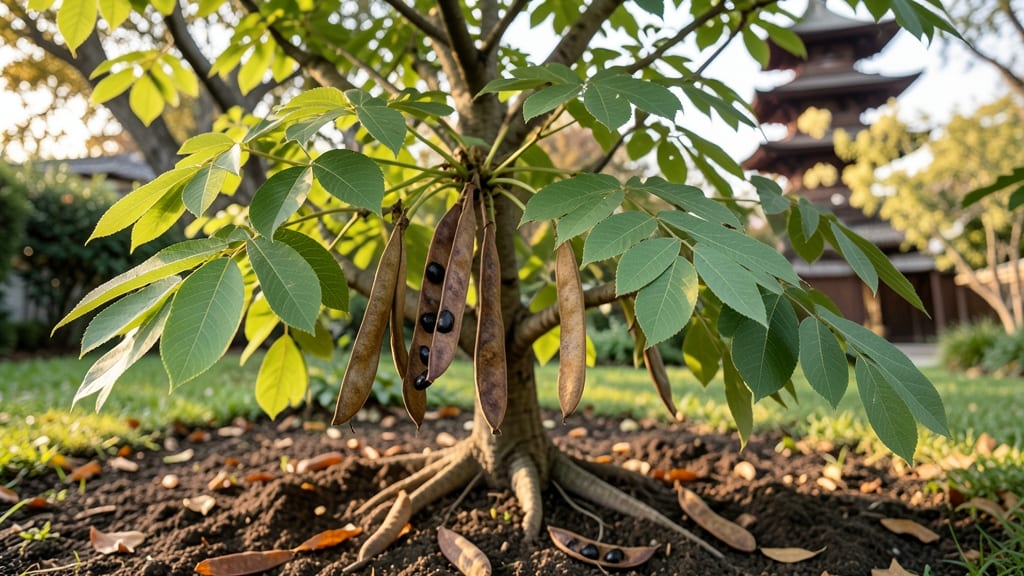
Harvesting Japanese pagoda tree seed pods in late fall gives you the chance to grow these stunning trees from scratch—no nursery needed. 🌿 The key is timing: pods ripen unevenly, so check them weekly starting in October.
Once they turn brown and split open, you’ve got viable seeds ready for processing.
Extracting the seeds is simple: just crack open the pods and scoop out the flat, brown seeds inside. Store them in a paper bag in a cool, dry place until spring, or stratify them for faster germination.
This tree grows slowly, so patience is your best friend—think years, not months, before you see mature height.
Plant the seeds in well-draining soil, barely covering them, and keep the soil consistently moist but not soggy. Germination can take 6-12 months, so don’t rush it. Once sprouted, give seedlings bright, indirect light and occasional fertilizing to encourage strong roots.
Watch for slow growth—it’s normal—and protect young trees from harsh winds. With the right care, you’ll have a tree that thrives year-round, offering beautiful foliage and fragrant blooms. The wait is worth it!
📚 In This Guide
- What you need
- Instructions
- Tips and common mistakes
- Wrapping up and next steps
What you need
- ● Japanese pagoda tree seed pods (freshly fallen or hand-harvested; aim for 10–20 pods for optimal viability).
- ● Pruning shears or sharp scissors (for harvesting pods still attached to branches).
- ● Brown paper bags or breathable mesh bags (2–3 bags, 12x15 inches each, to prevent moisture buildup).
- ● Plastic or glass storage containers (airtight, 1–2 containers with lids for long-term storage).
- ● Labeling markers or tags (to mark harvest dates and storage conditions).
- ● Rubbing alcohol (70% or higher) and cotton swabs (for sterilizing tools).
- ○ Gloves (optional but recommended) (to protect hands from sap or prickly pods).
- ● Seed germination kit (with moisture meter or humidity tray for faster sprouting).
- ● Desiccant packets (to absorb excess moisture in storage containers).
- ● Notebook or app (to track pod maturity, harvest dates, and germination progress).
- ● Small fan or dehumidifier (if storing pods in a damp climate).
How to harvest and store Japanese pagoda tree seed pods
Here's my go-to method for collecting seed pods that stay viable for months—no special tools or guesswork.
🌱 Step 1: Identify and Harvest Ripe Seed Pods
The best time to harvest is when pods turn light brown and begin splitting open naturally. They’ll feel dry and papery to the touch, almost like crinkling paper. I check trees in late fall (October-November) when most pods have matured but haven’t yet scattered seeds.
Use clean pruning shears to snip pods from branches—don’t pull them off by hand, or you might damage the tree. Place pods in a paper bag (not plastic) to allow airflow. If you miss the perfect window, pods stay viable on the tree until they open completely, but germination rates drop after 6-8 weeks of drying.
🪴 Step 2: Dry and Store Pods for Germination
Spread the harvested pods in a single layer on a wire mesh tray or paper towels in a dry, shaded spot for 2-3 weeks. This mimics natural drying conditions and prevents mold. Flip them occasionally to ensure even drying—you’ll know they’re ready when they’re completely dry and brittle.
Store the dried pods in a sealed airtight container (like a mason jar) in a cool, dark place (like a basement or pantry). They’ll stay viable for up to 1 year this way. Label the container with the harvest date—older seeds germinate more slowly.
☀️ Step 3: Stratify Seeds for Best Germination
Japanese pagoda tree seeds need stratification to break dormancy. Place the dried pods in a ziplock bag with a damp paper towel (not soaking wet). Seal the bag and refrigerate for 4-6 weeks at 35-40°F. Check weekly—the towel should stay slightly damp, not soggy.
After stratification, remove the seeds from the bag and plant them ¼ inch deep in well-draining potting mix (like the 2 gallons of seed-starting mix you’ll need). Keep the soil moist but not waterlogged—you’ll see sprouts in 2-4 weeks if conditions are right.
⏰ Step 4: Plant Stratified Seeds Indoors
Use 4-inch pots for each seedling to give roots room to establish. Place pots in a sunny window or under grow lights for 14-16 hours daily. Japanese pagoda trees grow slowly at first, so don’t rush—wait until seedlings have 3-4 true leaves before transplanting outdoors in spring (after last frost).
Hardening off takes 10-14 days—start with 1 hour outside on a shaded day, then gradually increase exposure. These trees thrive in full sun to partial shade, so choose a spot with morning sun if summers are hot.
Tips & tricks for perfect Japanese pagoda tree seed pod harvesting
Real talk: Harvesting these pods right means the difference between seedlings that thrive and ones that flop. Here's what I've learned after years of trial and error.
Timing is Everything: Those light brown pods in late fall (October-November) are your sweet spot. I've missed this window twice—once too early when pods were still green, and once too late when they'd already scattered seeds. The pods should feel dry and papery, almost like crinkling paper. If you're unsure, gently squeeze a pod—if it opens easily, it's ready.
Harvesting Technique: Always use clean pruning shears to snip pods from branches. I learned this the hard way after pulling pods off by hand and damaging the tree's bark. The paper bag for airflow is non-negotiable—plastic traps moisture and encourages mold. I've had entire batches ruined because I skipped this step.
Drying Strategy: The 2-3 week drying period on a wire mesh tray is crucial for preventing mold. I've tried rushing this by using ovens or heaters, but it always leads to brittle, unusable seeds. Flip the pods occasionally to ensure even drying—you'll know they're ready when they're completely dry and brittle. This step mimics natural drying conditions perfectly.
Storage Wisdom: Labeling your airtight container with the harvest date is a game-changer. Older seeds germinate more slowly, and you'll want to know exactly how long they've been stored. I keep mine in a cool basement where temperatures stay consistently around 40°F—this extends their viability for up to a year.
Pro Tips for Japanese Pagoda Tree Seed Pods
- Real talk: Harvesting these pods right means the difference between seedlings that thrive and ones that flop.
- Timing is Everything: Those light brown pods in late fall (October-November) are your sweet spot.
- Harvesting Technique: Always use clean pruning shears to snip pods from branches.
Frequently asked questions
When is the best time to harvest Japanese pagoda tree seed pods?
The ideal time to harvest seed pods is in late fall to early winter (November–January), when they turn brown and begin to split open naturally. Harvesting too early (green pods) reduces viability, while waiting too long risks losing seeds to birds or weather. Aim for pods that are dry but still intact—they should crack easily with gentle pressure.
How long do harvested seed pods stay viable for planting?
Japanese pagoda tree seeds remain viable for 1–2 years if stored properly in a cool, dry place (like a sealed container with silica gel). For best results, plant them within 6–12 months of harvest. Pro tip: Label your pods with the harvest date to track freshness!
Can I grow Japanese pagoda trees from seed pods I find on the ground?
Yes, but with caution! Ground-collected pods may have lower viability due to exposure to moisture, pests, or weather. Sift through fallen pods carefully—look for intact, dry ones without holes or mold. For higher success rates, prioritize pods still attached to the tree or freshly dropped in late fall.
What’s the easiest way to troubleshoot if my seeds aren’t germinating?
If your seeds aren’t sprouting, check these common issues:
- Stratification: Japanese pagoda seeds often need a cold period (4–6 weeks in the fridge) to break dormancy.
- Moisture: Keep soil consistently damp (not soggy) during germination.
- Depth: Plant seeds ¼ inch deep—too deep delays sprouting.
- Patience: Germination can take 4–8 weeks; avoid disturbing the soil.
Still stuck? Try a soak test: Place seeds in warm water for 24 hours—if they sink, they’re viable!
Are there alternatives to growing from seed pods if I want faster results?
For quicker growth, consider:
- Grafting: Buy a young sapling from a nursery (2–3 years old) for instant shade.
- Layering: Bend a low branch to the ground, cover it with soil, and wait for roots to form (takes ~1 year).
- Cutting propagation: Semi-hardwood cuttings in spring/summer root well with rooting hormone.
Seed-growing is rewarding but slower—plan ahead if you need shade ASAP!
Wrapping up and next steps
Japanese pagoda tree seed pods are a gardener’s dream—easy to harvest, versatile to grow, and perfect for year-round beauty! 🌿 Whether you’re a seasoned horticulturist or a curious beginner, these pods offer a stress-free way to expand your garden with minimal effort.
Now that you’re equipped with the right tools and tips, why not take the next step? Plant a few pods this season and watch your outdoor space transform with vibrant, resilient foliage.
Ready to dive in? Grab your gloves, find a sunny spot, and let nature do the rest—your future pagoda trees will thank you! 🌱