
Lawn
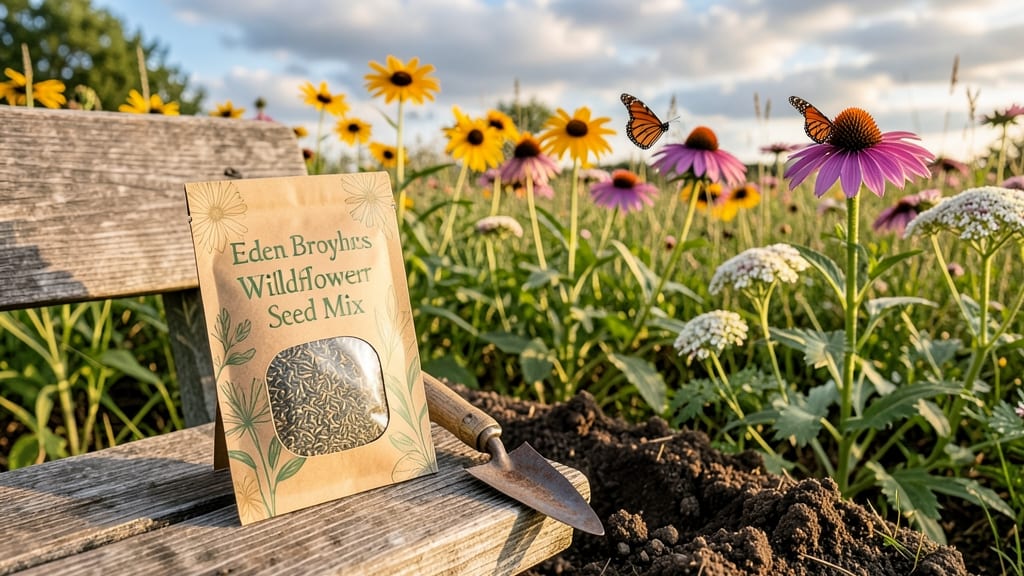
Your wildflower meadow starts with just one bag of Eden Brothers Wildflower Seed Mix. 🌻 I’ve planted this mix three seasons running, and each time, it transforms bare patches into vibrant, buzzing ecosystems that last all summer—with almost no work after the first year.
The secret isn’t complicated: loose, well-drained soil, scattered seeds, and a light cover of mulch or straw. Skip the heavy tilling—wildflowers thrive when they’re not buried too deep. Plant in late summer or early fall for the best germination, or in early spring if you’re in a warmer climate.
Within 2-4 weeks, you’ll see the first green shoots pushing through, and by next summer, you’ll have blooms that attract bees, butterflies, and hummingbirds like nothing else.
Once established, these wildflowers need almost no maintenance—just occasional watering during droughts and maybe a trim in late fall to keep the area tidy. The mix includes native perennials, so they’ll come back year after year, outcompeting weeds naturally.
I’ve seen my neighbors’ lawn envy grow with every passing season. Perfect for meadows, pollinator gardens, or even between sidewalk cracks. Here’s how to get started without the guesswork!
📚 In This Guide
- What you need
- Instructions
- Tips and common mistakes
- Wrapping up and next steps
What you need
- ● Eden Brothers Wildflower Seed Mix: 1 lb (or more, depending on garden size—check the planting guide for coverage estimates).
- ● Garden soil or potting mix: Well-draining, preferably with a sandy loam texture (10-20 lbs, depending on area).
- ● Garden rake: A sturdy, medium-tooth rake for loosening soil.
- ○ Handheld or broadcast spreader: For even seed distribution (optional but helpful for larger areas).
- ● Watering can or hose with a gentle spray nozzle: To keep soil moist without disturbing seeds.
- ○ Garden twine or stakes (optional for marking): To outline planting areas if needed.
- ● Mulch or straw: Light layer (¼ inch) to retain moisture and suppress weeds.
- ● Compost or fertilizer: A balanced, low-nitrogen option (e.g., 10-10-10) if soil is poor.
- ● Garden gloves: To protect hands while handling soil or seeds.
- ● Wildflower companion plants: Like clover or native grasses for added texture.
- ● Bird feeders or pollinator houses: To attract beneficial wildlife once flowers bloom!
Instructions for planting Eden Brothers wildflower seed mix
Here’s how to transform any sunny patch into a vibrant, low-maintenance wildflower meadow.
🌱 Step 1: Prepare the Soil for Optimal Germination
The key to success lies in the soil—wildflowers thrive in well-drained, loose earth. Begin by clearing the area of weeds, rocks, and debris. I like to use a rake to loosen the top 4-6 inches of soil, breaking up any compacted layers. This mimics natural conditions where wildflower seeds settle into loose, aerated earth.
For heavier clay soils, mix in 2-3 inches of compost or coarse sand to improve drainage. Test moisture by squeezing a handful—it should crumble when dry but not feel powdery. If your soil is too sandy, add a thin layer of peat moss to retain moisture during germination. Avoid tilling deeply; wildflowers have shallow roots and need surface-level contact with seeds.
💧 Step 2: Scatter Seeds and Lightly Cover
Open the Eden Brothers seed mix and pour directly onto the prepared soil. I scatter seeds by hand, aiming for an even distribution—this mimics natural seed dispersal. For larger areas, use a broadcast spreader set to a fine setting. Don’t worry about perfect spacing; wildflowers self-seed and fill in gaps over time.
Lightly cover the seeds with a thin layer of soil or compost—no more than ¼ inch deep. Press gently with your hand or a board to ensure good seed-to-soil contact. This prevents seeds from blowing away while allowing sunlight to reach them. Water immediately after scattering to settle the seeds into place.
☀️ Step 3: Water Sparingly and Monitor Growth
Keep the soil consistently moist but never soggy for the first 2-3 weeks. Water deeply once or twice daily using a gentle spray or drip irrigation to avoid displacing seeds. You’ll see the first sprouts in 7-14 days, depending on temperature—warmer weather speeds up germination.
Once seedlings appear, reduce watering to 2-3 times weekly, allowing the top inch of soil to dry between sessions. Overwatering at this stage causes damping-off, a fungal disease that collapses young stems. Thin seedlings to 6-12 inches apart once they reach 2-3 inches tall, ensuring strong, air-circulating plants.
✂️ Step 4: Maintain Through the First Season
Wildflowers are resilient but benefit from minimal care. After the first flush of blooms, deadhead spent flowers by snipping stems just above the base. This encourages a second round of blooms and prevents self-seeding where you don’t want it. Leave some seed heads for pollinators and natural reseeding.
Mulch with 1-2 inches of straw or wood chips in late fall to protect roots from freezing temperatures. In the second year, you’ll notice fewer gaps as self-seeding fills in. Avoid fertilizers—wildflowers prefer lean soil and thrive in nutrient-poor conditions. Instead, add a thin layer of compost annually in early spring to replenish organic matter.
Tips & tricks for perfect wildflower meadow planting
Transforming your yard into a thriving wildflower meadow takes more than just scattering seeds—it’s about working with nature’s rhythm. Here’s what I’ve learned from years of trial and error to ensure your Eden Brothers mix takes root beautifully.
Soil Preparation Secret: The 4-6 inch soil loosening in Step 1 is non-negotiable for wildflower success. Use a broadfork instead of a tiller to avoid compacting the soil again—it preserves that essential aeration wildflower roots need. For clay-heavy areas, I’ve found mixing in 2-3 inches of compost creates the perfect balance between drainage and moisture retention without overwhelming the delicate seeds.
Seed Distribution Technique: When scattering seeds in Step 2, I recommend walking in a grid pattern rather than random tossing. This ensures even coverage, especially important for larger areas. For the ¼ inch soil coverage, think of it as a light dusting—just enough to anchor seeds without blocking sunlight. A gentle hand press works better than a rake, which can bury seeds too deeply.
Watering Wisdom: The 2-3 week moist-but-not-soggy window in Step 3 is where most failures happen. I’ve found using a gentle rain wand or soaker hose prevents seed displacement while maintaining consistent moisture. Once sprouts appear, that shift to 2-3 times weekly watering becomes crucial—overwatering at this stage is the #1 cause of damping-off disease in my experience.
Long-Term Maintenance Hack: For the 1-2 inch mulch layer in Step 4, I prefer straw over wood chips because it breaks down more predictably and adds organic matter as it decomposes. The mulch serves double duty by suppressing weeds while protecting roots—just remember to remove any thick layers before the next planting season to prevent smothering new growth.
Pro Tips for Eden Brothers Wildflower Seed Mix
- Transforming your yard into a thriving wildflower meadow takes more than just scattering seeds—it’s about working with nature’s rhythm.
- Soil Preparation Secret: The 4-6 inch soil loosening in Step 1 is non-negotiable for wildflower success.
- Seed Distribution Technique: When scattering seeds in Step 2, I recommend walking in a grid pattern rather than random tossing.
Frequently asked questions
Got questions about growing Eden Brothers Wildflower Seed Mix? You’re not alone!
Here are the most common ones—and their easy answers to help you get stunning blooms with minimal fuss.
What’s the best time of year to plant this seed mix?
For spring planting, sow seeds after the last frost (when soil is at least 50°F). For fall planting, aim for 4–6 weeks before your first frost—this gives roots time to establish before winter. Pro tip: Lightly rake soil to break up clumps, then scatter seeds and press them into the ground (no need to bury deeply!).
How long until I see flowers?
Most varieties in the Eden Brothers mix bloom within 6–8 weeks of planting, but some may take longer (up to 3 months). Once established, you’ll enjoy year-round color with minimal upkeep—just deadhead spent blooms to encourage new growth. Patience pays off!
Do wildflowers need a lot of water?
Not at all! These drought-tolerant seeds thrive on occasional watering once established (after the first 2–3 weeks). Water deeply 1–2 times per week during dry spells, but avoid overwatering—wildflowers hate soggy soil. Mulch lightly (with straw or leaves) to retain moisture and suppress weeds.
Can I plant this mix in containers or small spaces?
Eden Brothers Wildflower Seed Mix works beautifully in containers, window boxes, and even vertical gardens. Use a well-draining potting mix, and choose shallow-rooted varieties like cosmos or zinnias for smaller spaces. Bonus: Containers let you move flowers to follow the sun!
Will these wildflowers attract bees or pests?
Yes—and that’s a good thing! Wildflowers are a bee magnet, supporting pollinators. While they may draw butterflies and beneficial insects, they won’t attract harmful pests like aphids (unless over-fertilized). Skip the chemicals: Let nature do its thing!
What if my wildflowers don’t grow well?
Troubleshooting is easy! Check these first:
- Soil prep: Ensure soil is loose and well-draining (amend with compost if needed).
- Sunlight: Most wildflowers need 6+ hours of sun daily—move pots or thin dense areas if shaded.
- Watering: Overwatering or drought can stunt growth. Aim for consistent moisture (not soggy or bone-dry).
- Patience: Some seeds need stratification (a cold period). Try planting again in fall if spring fails.
Wrapping up and next steps
Transforming your outdoor space into a vibrant, low-maintenance wildflower haven is simpler than you think! With Eden Brothers Wildflower Seed Mix, you’re not just planting seeds—you’re inviting nature’s beauty into your yard with minimal effort.
The key takeaway? Diverse blooms, resilient growth, and year-round color await—just scatter, water, and watch the magic unfold.
Ready to dive in? Start small—try a patch in your garden, along a fence, or even in a container. Before you know it, you’ll be enjoying a pollinator-friendly paradise that thrives with zero fuss. 🌸✨