
Size
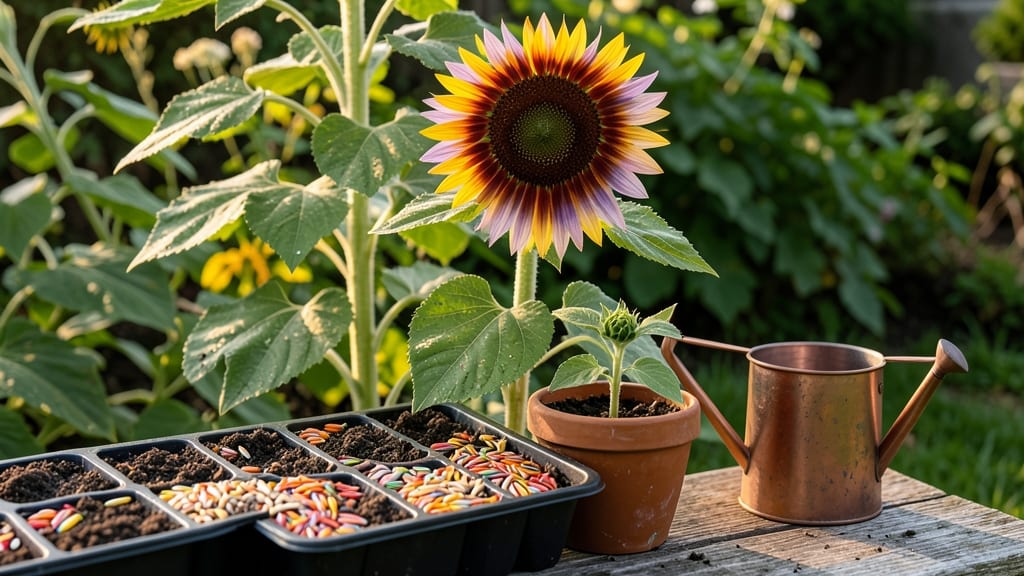
Growing a rainbow sunflower seed in your garden means giant blooms and vibrant colors in just 90 days—no nursery plants needed. ✨ I planted my first batch last spring, and the mix of fiery reds, deep purples, and sunny yellows completely transformed my garden into a living rainbow.
These sunflowers thrive in full sun and well-drained soil, but the real secret is their spacing: plant seeds 6 inches apart in rows 18 inches apart to give them room to grow.
Water consistently—about 1 inch per week—and watch those stems thicken into sturdy stalks ready to support towering blooms.
By midsummer, you'll have 5-6 foot sunflowers bursting with color, attracting pollinators and turning heads. The best part? They're low-maintenance—just keep the soil moist and deadhead spent blooms to encourage more flowers.
Perfect for cutting gardens, pollinator-friendly spaces, or simply adding drama to any yard. Let's get those seeds in the ground!
📚 In This Guide
- What you need
- Instructions
- Tips and common mistakes
- Wrapping up and next steps
What you need
- ● Rainbow sunflower seeds – Choose a mix like Autumn Mix or Rainbow Sunflower Blend (1–2 lbs for a small garden, 3+ lbs for larger spaces). Look for non-GMO, heirloom varieties for the best color range!
- ● Well-draining potting mix – 5–10 gallons (for containers) or enough to fill your garden beds (aim for 6–12 inches deep). Add compost for nutrients!
- ● Containers or garden space – Containers: 5–10 gallon pots (1–2 plants per container). Garden beds: Full sun (6+ hours/day) and at least 18–24 inches of spacing between plants.
- ● Watering can or hose with a gentle nozzle – Sunflowers need 1–2 inches of water per week, especially during germination.
- ○ Fertilizer (optional but helpful) – A balanced, slow-release fertilizer (10-10-10) or compost tea to boost growth.
- ● Garden gloves – To protect your hands from prickly stems and soil.
- ● Trowel or small shovel – For planting seeds 1–1.5 inches deep.
- ● Plant labels or markers – To track varieties (especially useful for rainbow mixes!).
- ● Mulch (straw or wood chips) – Helps retain moisture and suppress weeds.
- ○ Stakes or cages (optional) – Tall varieties (5–9 feet) may need support in windy areas.
Step-by-step instructions for growing rainbow sunflowers
Here's how to grow those towering, vibrant sunflowers that'll turn heads in your garden.
🌱 Step 1: Choose the Right Varieties and Planting Location
Select a mix of dwarf and giant varieties—like 'Moulin Rouge' for compact blooms or 'Russian Giant' for 12-foot stalks. Sunflowers thrive in full sun (6-8 hours daily) and well-draining soil with a pH of 6.0-7.5. Test your soil first; amending with compost improves fertility and drainage.
Space seeds 6-12 inches apart for dwarf varieties and 18-24 inches apart for giants. If planting in rows, allow 2-3 feet between rows. I always mark planting spots with sticks to avoid overcrowding—sunflowers need elbow room to avoid competition for nutrients.
🌱 Step 2: Prepare Soil and Sow Seeds Directly
Sunflower seeds germinate best in soil temperatures of 60-70°F. Work in 2-3 inches of compost or aged manure before planting to provide phosphorus for strong root development. Scatter seeds ½ inch deep—deeper planting delays germination.
Thin seedlings to 1 every 6-12 inches once they reach 2-3 inches tall. Use scissors to snip unwanted sprouts at soil level rather than pulling, which disturbs roots. This ensures your strongest plants get all the nutrients and space they need.
☀️ Step 3: Provide Consistent Water and Support
Water deeply 1-2 times per week once established, aiming for 1-1.5 inches of water weekly. Keep soil moist but never soggy—sunflowers hate "wet feet." Mulch with 2-3 inches of straw or wood chips to retain moisture and suppress weeds.
For giant varieties, install 6-foot stakes or a sturdy trellis at planting time. Tie stems loosely with soft cloth strips every 2-3 feet as they grow. I always check ties weekly—wind can snap stems if supports aren't secure.
✂️ Step 4: Monitor for Pests and Deadhead for More Blooms
Watch for aphids or beetles; spray with neem oil if you spot clusters. Sunflowers rarely need fertilizer, but a light application of 5-10-10 fertilizer at planting and again when buds form can boost growth. Remove faded blooms to encourage more flowers—this is called deadheading.
Harvest seeds when the back of the bloom turns yellow and the petals drop. Twist the seed head gently to detach it, then hang it upside down in a dry, dark place for 2-3 weeks to fully dry. Store seeds in a cool, dry spot for next year's planting.
⏰ Step 5: Enjoy and Extend the Season
Cut blooms when petals are fully open but still firm. Place stems in warm water immediately to prolong vase life—sunflowers last 7-10 days this way. For fall interest, leave some stalks standing; birds will feast on the seeds, and dried blooms add texture to winter arrangements.
In colder climates, plant sunflowers in late spring after the last frost. In warm zones, you can even get a second crop by planting again in early summer. Just remember: the earlier you plant, the taller they'll grow!
Tips & tricks for growing stunning rainbow sunflowers
Here's what I learned after years of growing sunflowers—these tricks will help you avoid common pitfalls and grow sunflowers that'll make your garden the envy of the neighborhood.
Sunlight Strategy: Those 6-8 hours of full sun are non-negotiable for sunflowers. If your garden gets partial shade, position your tallest varieties ('Russian Giant') where they'll get the most sun, and plant dwarf varieties ('Moulin Rouge') in slightly shadier spots. I've found that even an hour less than the required sunlight can result in leggy, weak stems that struggle to support those massive blooms. Consider using reflective surfaces like white walls or mirrors to bounce extra light onto your sunflowers if needed.
Soil Science: The 6.0-7.5 pH range recommendation isn't just arbitrary—sunflowers are particularly sensitive to soil acidity. Grab a soil test kit (they're inexpensive) and adjust with lime if your soil tests too acidic. I've seen sunflowers in slightly alkaline soil (up to 7.8) thrive, but acidic soil (below 5.5) can lead to stunted growth and poor bloom production. For the 2-3 inches of compost mentioned, I like to mix in a handful of bone meal at planting time for an extra phosphorus boost—this helps those roots develop like crazy.
Thinning Technique: When you're thinning seedlings to 1 every 6-12 inches at the 2-3 inch tall stage, be patient and don't rush. The key is to wait until you have at least 4-6 strong seedlings per square foot before thinning. I use clean scissors to snip at soil level rather than pulling—this prevents disturbing the roots of your remaining plants. If you thin too early, you'll end up with more plants but weaker stems that can't support those giant blooms later.
Watering Wisdom: That 1-2 times per week watering schedule assumes average rainfall. In hot, dry climates, you might need to water every other day, especially when those giant varieties are reaching for the sky. The trick is to water deeply—aim for that 1-1.5 inches weekly—rather than frequent light waterings. I always water in the morning so the foliage has time to dry before evening, which helps prevent fungal diseases that can attack sunflowers. And remember, those 2-3 inches of mulch are your best friend for retaining moisture and keeping weeds at bay.
Pro Tips for Rainbow Sunflower Seed Grow A Garden
- Here's what I learned after years of growing sunflowers—these tricks will help you avoid common pitfalls and grow sunflowers that'll make your garden the envy of the neighborhood.
- Sunlight Strategy: Those 6-8 hours of full sun are non-negotiable for sunflowers.
- Soil Science: The 6.0-7.5 pH range recommendation isn't just arbitrary—sunflowers are particularly sensitive to soil acidity.
Frequently asked questions
Got questions about growing your own rainbow sunflower seed garden? You’re not alone! Here are some of the most common queries—plus quick, practical answers to help you grow bold, giant blooms in just 90 days.
How deep should I plant rainbow sunflower seeds?
Plant seeds about 1 inch deep in well-draining soil, spacing them 6–12 inches apart (closer for dwarf varieties, wider for giant types). Sunflowers love sunlight, so choose a spot with 6+ hours of direct sun daily. If your soil is heavy clay, mix in compost to improve drainage—this helps prevent rot.
When is the best time to plant rainbow sunflower seeds?
Sunflowers thrive in warm soil, so wait until after the last frost (when nighttime temps stay above 50°F). For most U.S. zones, this means late spring to early summer. If you’re in a short-season area, opt for fast-maturing varieties (like ‘Moulin Rouge’ or ‘Autumn Beauty’), which bloom in 60–90 days.
Can I grow rainbow sunflowers in containers?
Dwarf varieties (under 3 feet tall) do well in 5-gallon pots or larger. Use a lightweight potting mix and place containers in full sun. Giant varieties need 15+ gallons of space and sturdy support (like a tomato cage) to prevent toppling. Just ensure pots have drainage holes to avoid soggy roots.
Why aren’t my sunflower seeds sprouting?
Check these common issues:
- Cold soil: Wait for consistent warm temps (60°F+). Use a seedling heat mat if needed.
- Too deep: Seeds need light to germinate—plant no deeper than ½ inch if struggling.
- Damp but not wet: Keep soil moist (not soggy) until sprouts appear (usually 7–14 days).
- Old seeds: Store seeds in a cool, dry place—they lose viability after 1–2 years.
How do I get the brightest rainbow colors in my sunflowers?
Color intensity fades in hot, dry conditions or low light. To keep blooms vibrant:
- Water deeply 2–3 times per week (sunflowers hate drought stress).
- Fertilize with low-nitrogen, high-phosphorus food (like 5-10-10) at planting and when buds form.
- Deadhead spent blooms to encourage new flowers and extend the season.
- Choose heirloom or hybrid varieties like ‘Italian White’ or ‘Teddy Bear’ for true-to-name colors.
Wrapping up and next steps
Growing rainbow sunflower seeds is a rewarding journey that brings vibrant colors and towering beauty to your garden in just 90 days! With the right soil, sunlight, and care, you’ll enjoy not only stunning blooms but also edible seeds and eco-friendly benefits.
Whether you're a beginner or a seasoned gardener, these cheerful giants make gardening fun and fulfilling.
Ready to plant your seeds? Start by picking your favorite varieties, prepping your space, and following the simple steps above. Soon, your garden will be a burst of sunshine—and maybe even a local hotspot for pollinators! 🌻💛