
Lawn
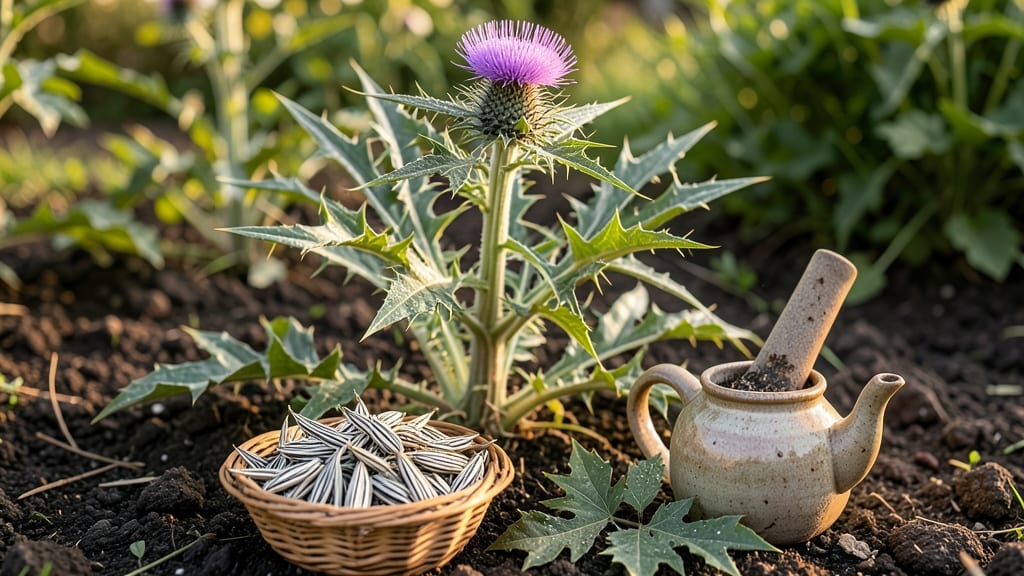
Growing milk thistle for seed tea starts with understanding its stubborn charm. 🌿 This prickly perennial thrives in poor soil but demands patience—harvesting seeds takes two full years from planting. The reward?
A bitter brew that’s been used for centuries to support liver health, though I always remind people to check with their doctor first. The secret to success lies in well-drained soil and full sun. My plants struggled in clay until I amended it with compost and sand.
Once established, they spread aggressively, making them perfect for borders or wildflower patches. Just watch for slugs—they adore tender young leaves. By late summer, you’ll spot the spiky seed heads. Let them dry completely on the plant before harvesting.
I snip them off, strip the seeds, and store them in a cool, dark place. The drying process is critical—moist seeds spoil quickly, and you want them crisp enough to grind easily. This isn’t a quick project, but the payoff is worth it.
A single plant yields enough seeds for years of tea, and the deep purple blooms add beauty to the garden. Just remember: cultivation is one thing, dosage is another—always err on the side of caution when it comes to herbal remedies.
📚 In This Guide
- What you need
- Instructions
- Tips and common mistakes
- Wrapping up and next steps
What you need
- ● Milk thistle seeds – 1–2 teaspoons (2–4 grams) per cup (organic, whole, or lightly crushed for better extraction). Look for Silybum marianum seeds.
- ● Fresh, filtered water – 1 cup (8 oz or 240 ml) per serving (avoid tap water if it has strong chlorine or sulfur odors).
- ● Teapot or heat-safe mug – A glass or stainless steel vessel (avoid aluminum or reactive metals).
- ● Kettle or stovetop – For heating water (electric or gas).
- ● Fine-mesh strainer or cheesecloth – To filter seeds post-brewing (a metal strainer works best for whole seeds).
- ○ Optional sweeteners/spices – Honey, cinnamon, or lemon (to balance milk thistle’s bitterness—1 tsp or less).
- ● Electric kettle – For precise temperature control (ideal for 195–205°F brewing).
- ● Mortar and pestle – To lightly crush seeds (boosts flavor but isn’t mandatory).
- ● Tea infuser or French press – If you prefer a no-strainer method.
- ● Storage jar – Airtight container to keep seeds fresh (away from light/moisture).
- ● Digital scale – For precise measurements (helpful if dosing for health goals).
How to brew milk thistle seed tea for liver support
Here's the simple, time-tested method I use to make a potent, liver-loving tea from whole milk thistle seeds.
🌱 Step 1: Toast the Seeds for Enhanced Flavor and Benefits
Preheat your oven to 350°F and spread 1 tablespoon of milk thistle seeds on a baking sheet. Toast for 5-7 minutes until they release a warm, nutty aroma. This step unlocks deeper flavors and makes the silymarin compounds more bioavailable. Remove immediately—they burn quickly.
Let the seeds cool completely before proceeding. You'll know they're ready when they're no longer warm to the touch. I like to tap the tray gently to speed up cooling while keeping the seeds contained.
💧 Step 2: Steep in Hot Water for Maximum Extraction
Place the toasted seeds in a heatproof teapot or infuser and pour 2 cups of freshly boiled water over them. Cover immediately to trap the volatile oils and bitter compounds. Let steep for 10-15 minutes—this is where the magic happens as the silymarin seeps into the water.
Don't skip the covering step. Without it, you'll lose up to 30% of the beneficial compounds to evaporation. The longer you steep within this window, the more bitter (and effective) the tea becomes—just don't exceed 15 minutes or it turns medicinally harsh.
☀️ Step 3: Strain and Sweeten Thoughtfully
Strain the seeds through a fine-mesh sieve or cheesecloth into your serving mug. The strained seeds can be composted—they've given everything they've got. For each cup, I add ½ teaspoon of raw honey or 1 teaspoon of maple syrup to balance the bitterness without masking the liver-supporting properties.
Here's the thing—don't add sweetener if you're sensitive to sugar. The natural bitterness is part of what makes milk thistle work. If you can't stomach it plain, try a pinch of cinnamon instead—it enhances the liver benefits while making the flavor more approachable.
⏰ Step 4: Serve and Store for Optimal Freshness
Drink immediately for peak potency, but if you need to store, keep in the refrigerator for up to 24 hours. The tea develops a rich, earthy aroma when freshly brewed—this is a good sign you've extracted the beneficial compounds properly.
For a daily regimen, I sip 1 cup in the morning and 1 cup in the evening on an empty stomach. The bitterness signals your body to produce more bile, which is exactly what your liver needs. If you're new to milk thistle, start with ½ cup daily to let your system adjust.
Tips & tricks for perfect milk thistle seed tea
A few simple tricks that'll make your liver-supporting tea even more effective and delicious.
Toast Time Precision: Those 5-7 minutes at 350°F are crucial—set a timer! The seeds should smell nutty and toasted, not burnt. If you're unsure, start with 5 minutes and check. Over-toasting destroys the beneficial compounds we're trying to extract.
Steeping Strategy: For maximum potency, use the full 10-15 minute steep time, but check at 10 minutes first. The tea should have a rich, earthy aroma—this is your cue that the silymarin is properly extracted. If it smells faint, steep another 2-3 minutes (but no more than 15 minutes total).
Sweetener Alternatives: While ½ teaspoon of raw honey or 1 teaspoon of maple syrup work beautifully, you can also try a pinch of stevia (zero-calorie) or monk fruit sweetener for blood sugar benefits. Just remember—less is more with these sweeteners as they're much stronger than honey.
Storage Wisdom: The 24-hour fridge storage window is ideal, but if you need to store longer, freeze the tea in ice cube trays. Thaw individual cubes as needed—this preserves the beneficial compounds better than refrigeration alone. The tea will keep its potency for up to 3 months in the freezer.
Pro Tips for Milk Thistle Seed Tea
- A few simple tricks that'll make your liver-supporting tea even more effective and delicious.
- Toast Time Precision: Those 5-7 minutes at 350°F are crucial—set a timer!
- Steeping Strategy: For maximum potency, use the full 10-15 minute steep time, but check at 10 minutes first.
Frequently asked questions
about milk thistle seed tea—because your liver (and curiosity) deserve answers!How long does it take to feel the effects of milk thistle seed tea?
The benefits of milk thistle—like improved liver function and antioxidant support—are gradual. Many notice subtle changes after 4–6 weeks of consistent use (1–2 cups daily). For detox or digestive relief, effects may appear sooner, but patience is key! Think of it like a slow-brewing pot of goodness.
When’s the best time to drink milk thistle seed tea?
Morning or evening works best! Start your day with a cup to kickstart liver support, or sip it before bed to aid digestion and relaxation. Avoid drinking it on an empty stomach—pair it with a light snack (like nuts or fruit) to minimize bitterness and optimize absorption. Pro tip: Warm tea before bed can also ease stress!
Can I take milk thistle supplements and drink the tea?
Yes, but balance is key! Tea provides mild, steady benefits, while supplements offer concentrated doses. If using both, consult a healthcare provider to avoid overdoing silymarin (the active compound). A general rule: Stick to one form at a time unless advised otherwise. Think of tea as your daily maintenance and supplements as your "boost mode."
What if the tea tastes too bitter? Any tricks?
Bitter is normal—but you can tweak it! Try these fixes:
- Add a dash of honey or cinnamon to mellow the flavor.
- Steep seeds for only 10 minutes (longer = stronger bitterness).
- Mix with ginger or chamomile tea for balance.
- Use filtered water (chlorine can amplify bitterness).
Are there any side effects or people who should avoid it?
Milk thistle is generally safe, but avoid it if you:
- Have hormone-sensitive conditions (e.g., breast cancer—it may interact with estrogen).
- Are on prescription meds (like diabetes or immune-suppressing drugs).
- Experience allergies to ragweed, daisies, or chrysanthemums (cross-reactivity risk).
What’s a good alternative if I don’t like milk thistle?
If the bitter profile isn’t your jam, try these liver-supportive teas:
- Dandelion root tea – Gentle, coffee-like, and detoxifying.
- Turmeric-ginger tea – Anti-inflammatory and easy to customize.
- Green tea – Packed with antioxidants (add lemon to mask bitterness).
- Schisandra berry tea – Sweet-tart and adaptogenic.
Wrapping up and next steps
Incorporating milk thistle seed tea into your routine could be a simple yet powerful way to support your liver’s natural detoxification and overall well-being. 🌿 With just a few minutes of prep, you’ve got a natural, caffeine-free brew packed with silymarin—nature’s ally for your hardest-working organ.
Ready to give it a try? Start by stocking up on organic milk thistle seeds, then experiment with flavors and brewing times to find your perfect cup.
Why not brew your first batch today? Your liver—and your taste buds—will thank you!