
Size
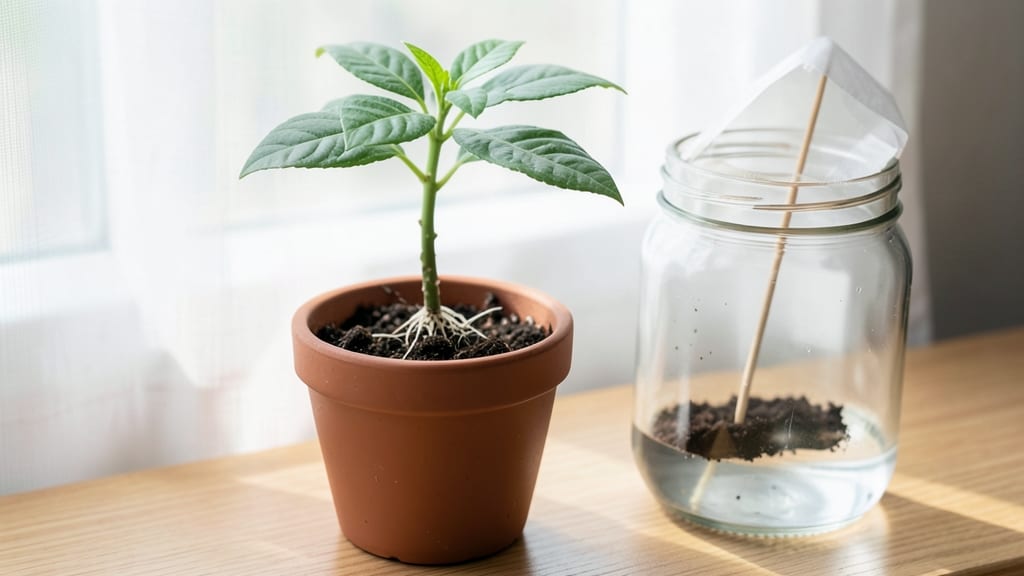
Growing an avocado plant from a seed feels like magic—especially when you skip the messy toothpick method. 🌱 I’ve sprouted dozens this way, and the clean, twist-free approach actually works better.
No rotten water, no tangled roots, just a simple jar and patience that pays off in 60 days with a sturdy seedling ready for soil.
The secret isn’t complicated—just a glass jar, a little water, and a seed with its pit intact. You’ll need a knife to trim the seed (but not too much), and that’s it for supplies.
Most people overthink it, but the real trick is consistency: fresh water every few days and a bright spot (no direct sun yet).
By week 6, you’ll see roots reaching 4–6 inches long, and when they hit that mark, it’s time to plant. The first leaves appear within 2–3 weeks after transplanting, and suddenly, you’ve got a tiny jungle tree on your windowsill.
The smell of fresh growth is addictive—once you’ve done it once, you’ll never toss another seed.
Works in any climate, from apartments to greenhouses, and the plant thrives on neglect once established. Here’s the foolproof method that actually grows—no guesswork, just results.
📚 In This Guide
- What you need
- Instructions
- Tips and common mistakes
- Wrapping up and next steps
What you need
- ● 1 ripe avocado – Choose a firm but soft avocado with no bruises.
- ● 1 sharp knife or peeler – For carefully removing the seed.
- ● Toothpicks (3-4) – To suspend the seed (or a small jar with holes).
- ● 1 clean glass or jar – At least 6 inches tall (e.g., a mason jar or drinking glass).
- ● Water – Filtered or room-temperature tap water (change weekly).
- ● Paper towels or a damp cloth – To keep the seed moist during germination.
- ● Potting soil (well-draining) – A mix of potting soil and perlite (or coconut coir) for planting.
- ● Small pot (4-6 inches wide) – With drainage holes for transplanting.
- ● Rooting hormone (gel or powder) – Speeds up root growth when transplanting.
- ● Spray bottle – For misting the seedling without overwatering.
- ● Grow lights or sunny windowsill – If natural light is limited.
- ● Fertilizer (balanced, diluted) – Once the seedling is established (after 2-3 months).
Step-by-step instructions for growing an avocado from seed
Here's the simple, foolproof method I've used to grow avocado seedlings—no fancy tools, just patience and a little science.
🌱 Step 1: Prepare the Seed for Planting
Start with a fresh avocado pit—no dried-out relics from last year's fruit. Rinse it gently to remove any remaining flesh, then carefully wipe away any brown spots with a damp paper towel. You'll notice three distinct sides: the flat side (where the seed attaches to the fruit), the rounded side, and the pointy tip.
The flat side is your reference point—this is where the roots will emerge. Using a clean, sharp knife, slice the pit lengthwise through the center, stopping just before you reach the flat side. You're not cutting all the way through; just making a shallow groove about ¼ inch deep on both sides. This creates a small opening for the root to push through.
💧 Step 2: Set Up the Water and Germination Container
Fill a clean glass or jar with room-temperature water—enough to cover about 1 inch of the pit's bottom. The pit should float with the flat side facing down and the pointy tip pointing upward. Change the water every 2-3 days to prevent mold or bacteria buildup.
Place the jar in a warm spot, like near a sunny window or under a grow light. You'll see roots sprouting from the flat side in about 2-6 weeks, depending on temperature. When the roots reach about 2-3 inches long, it's time to move to soil—but don't rush. Wait until you see a ½-inch root system before transplanting.
🪴 Step 3: Plant the Root in Soil
Fill a small pot—at least 6 inches deep—with well-draining potting mix. Make a hole about 1 inch deep and gently place the avocado pit into the soil so that the roots are buried but the top half remains exposed. Press the soil lightly around the pit to secure it without compacting it too tightly.
Water the soil until it's evenly moist but not soggy. Place the pot in a bright, indirect light spot—direct sun can scorch the young seedling. Keep the soil consistently moist, but avoid overwatering. You'll know it's time to water again when the top ½ inch of soil feels dry to the touch.
☀️ Step 4: Encourage Leaf Growth and Care for the Seedling
Once the seedling sprouts its first true leaves—those are the second set after the initial cotyledons—move it to a sunnier spot with bright, indirect light. Avocado seedlings need about 6-8 hours of sunlight daily, but avoid harsh afternoon sun until the plant is more established.
After the first set of true leaves appears, you can gradually introduce it to more direct sunlight. Fertilize lightly with a balanced, water-soluble fertilizer diluted to half-strength every 4-6 weeks during the growing season. Watch for yellowing leaves, which can signal overwatering or nutrient deficiency.
⏰ Step 5: Prune and Support as It Grows
As your avocado seedling grows, it may develop a single strong stem or multiple weaker stems. If it's leggy or top-heavy, gently pinch off the top growth to encourage bushier growth. You can also support the stem with a small stake if it starts to bend under its own weight.
When the seedling reaches about 12 inches tall, consider repotting it into a slightly larger container with fresh potting mix. Avocado trees grow slowly, so you won't need to repot more than once a year. Keep an eye out for pests like spider mites or aphids, and treat them immediately with a mild insecticidal soap if they appear.
Tips & tricks for perfect avocado seed sprouting
These simple strategies will help you avoid common pitfalls and maximize your seedling's success rate.
Seed Selection: Choose pits from organic avocados when possible—they're less likely to have been treated with fungicides that might inhibit germination. I've found Hass avocado pits work best because their thick skin protects the seed during the initial slicing process. Avoid pits with cracks or soft spots, as these often indicate internal damage that prevents root growth.
Germination Environment: The 2-3 days water change schedule is critical—it prevents bacterial growth while keeping the pit hydrated. Place your jar in a location with consistent warmth (around 70-75°F) for fastest results. A small heating pad under the jar can help if your home tends to stay cool. Watch for roots that curl back on themselves; this happens when the jar isn't stable—try placing it on a rubber mat to prevent movement.
Transplant Timing: Wait until you see roots that are at least ½ inch long before transplanting, but don't let them exceed 2-3 inches or they may become tangled. The soil should be moist but not soggy—think of it as damp like a wrung-out sponge. I like to use a small hand trowel to create the planting hole, as it gives me better control than my fingers. Gently pat the soil around the roots to eliminate air pockets without compacting it too tightly.
Pro Tips for Make An Avocado Seed Grow
- These simple strategies will help you avoid common pitfalls and maximize your seedling's success rate.
- Seed Selection: Choose pits from organic avocados when possible—they're less likely to have been treated with fungicides that might inhibit germination.
- Germination Environment: The 2-3 days water change schedule is critical—it prevents bacterial growth while keeping the pit hydrated.
Frequently asked questions
Got curious questions about growing an avocado seed? You’re not alone! Here are some of the most common queries—and their straightforward answers—to help you succeed in sprouting your own avocado tree.
How long does it take for an avocado seed to sprout?
With the right care, your avocado seed should sprout roots within 2–6 weeks. Once roots appear, keep it in water until they’re about 2–3 inches long (another 2–4 weeks). Total time from start to transplant? Aim for 6–8 weeks—patience is key!
Can I grow an avocado seed without using toothpicks?
Skip the toothpicks and try these alternatives:
- Rubber bands: Wrap them around the seed to hold it in place.
- Plastic wrap: Secure the seed to the jar with damp wrap.
- DIY stand: Use a small wooden block or cork to prop it up.
Why is my avocado seed rotting?
Rotting usually means too much water or poor drainage. Here’s how to fix it:
- Check water levels: Change the water every 2–3 days to prevent bacteria.
- Inspect the seed: If it smells foul or feels mushy, it’s rotting—start fresh!
- Adjust humidity: Keep it in a warm, bright spot (not direct sun) to speed drying.
When can I transplant my avocado seedling?
Transplant once your seedling has roots 2–3 inches long and a small sprout peeking out (usually 6–8 weeks in). Use a well-draining pot (6+ inches) with potting mix, and keep it in indirect sunlight for the first week to avoid shock.
Will my homegrown avocado tree produce fruit?
Yes—but it’ll take 3–5 years (or longer!) to bear fruit. Avocado trees need full sun, warm climates (USDA zones 9–11), and cross-pollination to fruit successfully. If you live in a cooler area, grow it as a houseplant and enjoy its lush foliage!
Wrapping up and next steps
Growing an avocado seed into a thriving plant is easier than you think—just a little patience, care, and the right techniques! 🌱 By following these steps, you’ve unlocked a fun, low-cost way to nurture life and even enjoy fresh avocados in the future.
Now that you’re ready to sprout, why not share your progress with friends or experiment with creative pots to keep the adventure alive?
Happy planting! Your tiny seed could soon become a lush, leafy friend—keep those roots watered and dreams growing! 💚