
Lawn
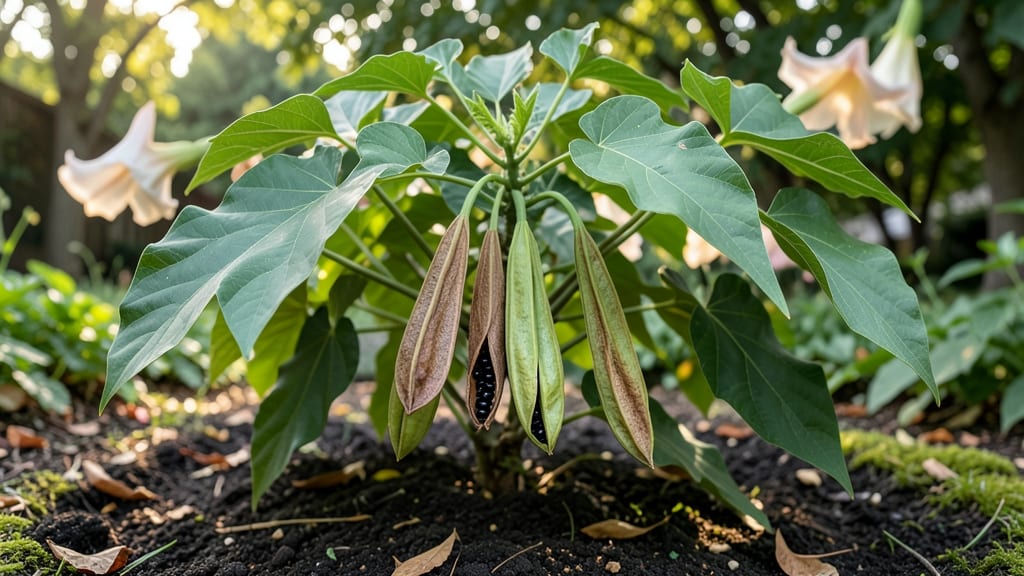
Handling Brugmansia seed pods means unlocking the secret to those shockingly fragrant blooms that transform any garden into a tropical paradise. 🌿 The key? A simple chill treatment that tricks these tropical seeds into breaking dormancy—no fancy equipment needed, just patience and the right timing.
Start by harvesting pods when they turn brown and papery, then let them dry completely before cracking them open. Inside, you’ll find flat, dark seeds that need 60-90 days of cold stratification to germinate reliably.
I’ve tried skipping this step, and the seeds either rot or take forever—don’t make that mistake. Once stratified, plant them in a warm, moist mix of 50% peat moss and 50% perlite, keeping the soil consistently damp but never soggy.
Seedlings emerge in 4-8 weeks, and that first glimpse of their distinctive leaves is worth every moment of waiting. Safety note: Brugmansia seeds are toxic—wear gloves when handling them, and keep them away from pets and kids.
With the right care, you’ll grow plants that reward you with football-sized blooms that smell like a moonlit jungle.
📚 In This Guide
- What you need
- Instructions
- Tips and common mistakes
- Wrapping up and next steps
What you need
- ● Brugmansia seed pods: 5–10 mature, dried pods (harvested from healthy plants).
- ● Seed-starting mix: 1–2 lbs of sterile, well-draining potting soil (avoid garden soil—it may harbor pathogens).
- ● Seed trays or small pots: 4–6 shallow containers (3–4" deep) with drainage holes.
- ● Plastic wrap or humidity dome: To maintain moisture during germination.
- ● Spray bottle: For gentle watering (avoid over-saturation).
- ● Grow lights or sunny windowsill: A warm, bright spot (70–75°F) for optimal growth.
- ● Scissors or knife: For carefully opening seed pods (wear gloves—brugmansia contains toxins!).
- ○ Heat mat (optional): A seedling mat (65–75°F) to speed up germination.
- ● Fertilizer (balanced, 10-10-10 or similar): Diluted to half-strength for young seedlings.
- ● Gloves & safety goggles: Brugmansia sap can irritate skin and eyes.
- ● Labels & markers: To track seedling varieties (if mixing types).
How to germinate brugmansia seeds using chill stratification
This method breaks dormancy and ensures strong, healthy starts for your fragrant tropical blooms.
🌱 Step 1: Harvest and Prepare Mature Seed Pods
Collect fully ripe, brown seed pods from your brugmansia plants in late fall. The pods should feel dry and papery to the touch—if they're still green or leathery, they're not ready. I like to work with them immediately after harvest while they're still fresh, but you can store them in a cool, dry place for up to two weeks if needed.
Open the pods carefully with pruning shears, avoiding the sticky resin that can irritate skin. Remove the seeds and place them on a paper towel to dry for 24 hours at room temperature. This prevents mold and ensures even moisture distribution later. The seeds should feel slightly firm but not hard—like a dry bean.
💧 Step 2: Cold Stratify Seeds for 6-8 Weeks
Place the dried seeds in a sealed plastic bag with a damp paper towel. I add 1 tablespoon of perlite to the bag to improve airflow and prevent clumping. Seal the bag loosely—just enough to keep moisture in but allow some air exchange. This mimics the natural winter chilling brugmansia seeds experience in their native Andean habitats.
Store the bag in your refrigerator's crisp drawer (the one designed for vegetables) where temperatures hover around 35-40°F. Check the seeds weekly and mist the paper towel if it feels dry to the touch. After 6-8 weeks, the seeds will have absorbed moisture and softened slightly—this is your cue that stratification is complete.
☀️ Step 3: Sow Stratified Seeds in Warm, Sterile Medium
Fill 4-inch pots with a sterile seed-starting mix (never garden soil—it's too dense and may harbor pathogens). Brugmansia seeds germinate best in warmth, so place the pots on a seedling heat mat set to maintain 75-80°F. Moisten the mix until it's damp but not soggy—think of a wrung-out sponge.
Plant 2-3 seeds per pot at a depth of ¼ inch, pressing lightly to ensure good soil contact. Cover the pots with clear plastic wrap to create a humid microclimate, but leave a small gap for airflow. Place the pots under grow lights set to 14 hours of light daily—natural sunlight alone won't provide enough intensity for reliable germination.
⏰ Step 4: Monitor for Germination and Thinning
Germination typically begins in 4-8 weeks, though some seeds may take up to 12 weeks to sprout. You'll see the first signs as tiny white roots emerge from the soil, followed by the seedling pushing through the surface. Brugmansia seedlings are delicate, so avoid disturbing them once they appear.
Once seedlings reach 2 inches tall, thin to the strongest plant per pot by snipping the others at the soil line with clean scissors. This prevents overcrowding and ensures your remaining seedling gets proper nutrients. Keep the soil consistently moist but never waterlogged—brugmansia roots rot easily if they sit in soggy conditions.
🌿 Step 5: Transition to Individual Pots and Light
After 8-10 weeks, when seedlings have 4-6 true leaves, transplant them into 6-inch pots filled with a well-draining potting mix (I blend 60% peat moss, 30% perlite, and 10% compost). Brugmansia plants need room to grow—crowding leads to weak stems and poor flowering.
Move the pots to a bright, indirect light location, gradually increasing sunlight exposure over 2 weeks to avoid leaf scorch. By the time your seedlings are 12 inches tall, they'll be ready for their first outdoor hardening-off period—just don't rush it. Brugmansia plants are tropical and need consistent warmth to thrive.
Tips & tricks for perfect brugmansia seed germination
These insider strategies will help you break dormancy and coax those fragrant blooms from stubborn seeds.
Pod Maturity Matters: In Step 1, resist the urge to rush—only use fully brown, papery pods that feel completely dry. I’ve learned the hard way that premature pods yield weak seedlings. If you’re unsure, split one open: mature seeds will be plump and dark, while immature ones look pale and shriveled. This single check saves weeks of frustration later.
Stratification Precision: The 6-8 week cold treatment in Step 2 is non-negotiable for brugmansia seeds, but here’s the secret: maintain consistent moisture without sogginess. I use a spray bottle to mist the paper towel weekly—just enough to keep it damp like a wrung-out sponge. Over-moisture causes mold, while dry conditions prevent germination entirely. The bag’s loose seal is crucial too; it mimics natural airflow while keeping humidity high.
Heat Mat Control: For Step 3’s warmth requirement, I recommend a dedicated seedling heat mat set to exactly 75-80°F—never rely on room temperature alone. Brugmansia seeds need this precise warmth to activate enzymes. Pro tip: Place an infrared thermometer on the soil surface to verify actual heat levels; many heat mats run cooler than their settings suggest. This attention to detail makes the difference between reliable germination and wasted effort.
Lighting Strategy: The 14-hour daily light requirement in Step 3 can be tricky with seasonal daylight changes. I use a combination of a grow light and my kitchen’s brightest window to supplement natural light. Position the pots 6-8 inches from the light source to prevent leggy seedlings. Remember, brugmansia plants are tropical—they need intense light to develop strong stems capable of supporting those massive, fragrant flowers.
Pro Tips for Brugmansia Seed Pods
- These insider strategies will help you break dormancy and coax those fragrant blooms from stubborn seeds.
- Pod Maturity Matters: In Step 1, resist the urge to rush—only use fully brown, papery pods that feel completely dry.
- Stratification Precision: The 6-8 week cold treatment in Step 2 is non-negotiable for brugmansia seeds, but here’s the secret: maintain consistent moisture without sogginess.
Frequently asked questions
about Brugmansia seed pods—because growing these dramatic beauties comes with its own set of curiosities! Here’s what you need to know before diving in.Are Brugmansia seed pods toxic, and should I handle them with gloves?
Brugmansia (Angel’s Trumpet) seed pods—and the plant itself—contain toxic alkaloids, including scopolamine, which can cause dizziness, hallucinations, or nausea if ingested. While the pods aren’t as potent as the leaves or flowers, it’s still wise to wear gloves when handling them. Wash your hands thoroughly afterward, especially if you’re around pets or kids.
How long do Brugmansia seed pods take to germinate under cold treatment?
With cold stratification (the chill method), most Brugmansia seeds sprout in 4–12 weeks. Start by chilling moist seeds for 6–8 weeks in the fridge, then plant them in warm, well-draining soil. Patience is key—some stubborn seeds may take up to 3 months! Pro tip: Keep soil consistently moist but not soggy during this phase.
Can I grow Brugmansia from seed pods without cold treatment?
While possible, cold stratification mimics natural conditions and significantly boosts germination rates. Without chilling, seeds may take months (or never sprout) due to their hard outer coating. If you’re impatient, try nicking the seed coat with sandpaper or a knife to speed things up—but cold treatment remains the gold standard.
Why did my Brugmansia seed pods dry up before opening?
Dried, unopened pods usually mean immature seeds or environmental stress (like drought or extreme heat). Wait until pods turn brown and papery before harvesting—this signals ripeness. If they shrivel too soon, try hand-pollinating flowers with a paintbrush or wait for next season’s blooms. Fix: Ensure your plant gets full sun, consistent water, and rich soil.
Are there non-toxic alternatives to Brugmansia for fragrant blooms?
If you love the scent but want a safer option, try these low-toxicity, fragrant plants:
- Night-Blooming Jasmine (Cestrum nocturnum) – Sweetly scented but mildly toxic (keep away from pets).
- Gardenia (Gardenia jasminoides) – Non-toxic, creamy-white blooms with a heavenly aroma.
- Tuberose (Polianthes tuberosa) – Highly fragrant and pet-safe (though invasive in warm climates).
- Datura (Datura spp.) – Highly toxic (avoid unless experienced—similar risks to Brugmansia!).
Wrapping up and next steps
Brugmansia seed pods are a gardener’s gateway to dramatic, fragrant blooms—but their success hinges on patience and the right techniques, like chill-enhanced germination. By following the steps outlined here, you’ll unlock the potential of these tropical beauties, even in cooler climates. 🌱✨
Ready to transform your garden? Start by gathering your seed pods, then dive into the cold stratification process. With a little time and care, you’ll soon be rewarded with stunning, intoxicating flowers that’ll make your outdoor space unforgettable!