
Lawn
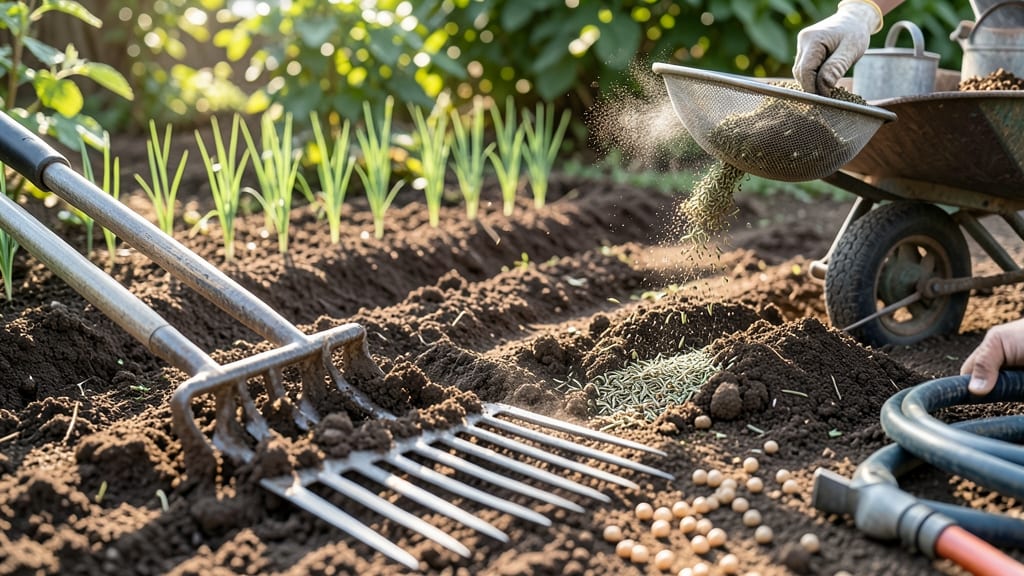
Planting grass seed on hard dirt feels like trying to grow flowers in concrete—until you know the right tricks. 🌱 The secret isn't brute force; it's loosening that compacted soil so seeds can snuggle into moisture and sunlight instead of sitting on top like lost marbles.
My first attempt ended with bare patches, but after learning to break the crust, I now have a lawn that greens up faster than my neighbor's (and stays that way).
You'll need three things: a way to crack the hardpan (rent a tiller or use a broadfork), organic matter to feed the soil (compost or peat moss), and the right seed mix for your climate.
Skip the tilling, and your seeds will bake in the sun or wash away with the first rain. Do it right, and those tiny seeds get the perfect bed—moist, crumbly, and ready to sprout within 7-14 days.
What you end up with is a lawn that doesn't just survive but thrives—deep green blades that outcompete weeds and handle foot traffic better than store-bought sod. The key is keeping the soil moist (not soggy) for the first two weeks, then backing off to let roots establish.
No more patchy, struggling grass that browns by summer.
Works for both new lawns and repairing bare spots in existing ones. The same principles apply whether you're seeding a 100-square-foot patch or a whole backyard. Here's how to break that hard dirt barrier for good.
📚 In This Guide
- What you need
- Instructions
- Tips and common mistakes
- Wrapping up and next steps
What you need
- ● Grass seed – Choose a high-quality seed blend suited to your climate (e.g., cool-season or warm-season varieties). Aim for 5-10 lbs per 1,000 sq ft, depending on seed type and coverage needs.
- ● Garden rake – A sturdy, heavy-duty rake (with 1/4-inch to 1/2-inch tines) to break up and level the soil.
- ● Shovel or mattock – For digging deeper into compacted areas or removing debris. A round-point shovel works best for precision.
- ● Broadcast spreader – A handheld or walk-behind spreader ensures even seed distribution. Adjust settings based on seed type (e.g., 1/4 lb per 1,000 sq ft for fine seeds).
- ● Topsoil or compost – 1-2 inches of high-quality topsoil or compost to improve soil texture and fertility.
- ● Water source & hose with nozzle – A gentle rain or mist setting for hydration without displacing seeds.
- ○ Lawn roller (optional but helpful) – A lightweight roller (50-100 lbs) to press seeds into the soil for better contact.
- ● Soil amendment – Add gypsum (for clay soil) or sand (for heavy compacted dirt) to improve drainage and aeration.
- ● Starter fertilizer – A low-nitrogen, high-phosphorus fertilizer (e.g., 10-20-10 ratio) to boost root growth.
- ● Erosion control blanket – Useful for sloped areas to hold seeds in place until germination.
- ● Knee pads or work gloves – Because comfort matters when you’re on your hands and knees!
- ● pH test kit – To check soil acidity/alkalinity (ideal range: 6.0-7.0 for most grasses). Adjust with lime or sulfur if needed.
Step-by-Step instructions for planting grass seed on hard dirt
Here's how to break through tough soil and get your lawn growing fast—no heavy machinery required.
🪴 Step 1: Prepare the Hard Dirt for Seeding
Start by raking the hard dirt with a stiff-bristle rake to break up the surface crust. You want to create a rough, uneven texture that gives seeds something to grip. I like to work in small sections—about 2 feet by 2 feet at a time—so I don't miss spots or overwork the soil.
Next, use a garden fork to loosen the top 2-3 inches of soil. Push the fork in at a slight angle, then lift and wiggle it to break up compacted layers. This step is critical—hard dirt acts like a barrier, and seeds need loose soil to establish roots. If the ground feels rock-hard after forking, go deeper until you hit softer soil.
💧 Step 2: Level and Amend the Soil
Drag a leveling rake across the area to smooth out high and low spots. You're aiming for a flat, even surface so water can spread uniformly when you water later. I run the rake in one direction first, then perpendicular to catch any remaining bumps.
Now, sprinkle a thin layer of compost or topsoil over the loosened dirt—just enough to cover the rough spots but not bury the existing soil completely. This adds nutrients and helps seeds make contact with softer material. Lightly rake it in so it blends with the surface without creating clumps.
☀️ Step 3: Spread Seed Evenly and Lightly Cover
Use a broadcast spreader or your hand to scatter the grass seed evenly across the prepared area. Walk in a crisscross pattern to avoid thick patches or bare spots. For a 2-foot by 2-foot section, about ½ pound of seed should do the trick—adjust based on your seed packet's coverage rate.
Once seeds are down, lightly cover them with a thin layer of soil or compost using a rake. The goal is to bury them no deeper than ¼ inch. This is where most people mess up—too deep, and seeds won’t germinate; too light, and they’ll dry out. A gentle sweep with the rake ensures just enough coverage.
💧 Step 4: Water Gently and Keep Soil Moist
Water the seeded area immediately with a fine mist from a hose or sprinkler. You want the soil to feel damp, like a wrung-out sponge, but not soggy. Overwatering washes seeds away or creates mud, while underwatering leaves them high and dry. I check moisture by pressing my finger into the soil—it should feel cool and damp ½ inch deep.
Keep the soil consistently moist for the next 10-14 days—this is the critical window for germination. Water lightly twice daily if the weather is hot or dry, or once daily if it’s cooler. You’ll know you’re doing it right when the soil stays dark and damp but doesn’t puddle. Avoid heavy watering, which can dislodge seeds or create crusty surfaces.
⏰ Step 5: Monitor and Maintain Until Grass Establishes
Watch for the first signs of germination, which usually appear in 7-21 days depending on the grass type and weather. You’ll see tiny green blades or fuzzy sprouts pushing through the soil. This is the moment you’ve been waiting for—don’t skip watering now, even if the grass looks sparse.
Once the grass reaches 2-3 inches tall, you can reduce watering to 1 inch per week. Avoid walking on the new grass for at least 4-6 weeks to let roots establish. If you notice bare spots after germination, sprinkle a little more seed and water gently to encourage even growth.
Tips & tricks for planting grass seed on hard dirt
Here's what nobody tells you about breaking through tough soil—these tricks make all the difference between patchy growth and a lush lawn.
The Rake Angle Matters: When you're working in Step 1 with that stiff-bristle rake, hold it at a 45-degree angle to the ground. This creates deeper grooves in the hard crust that give seeds something to latch onto. I learned this the hard way after seeing seeds wash away during my first rain—those grooves make the difference between seeds holding on and getting swept away.
Fork Technique for Stubborn Soil: In Step 1, when using your garden fork to loosen the top 2-3 inches, don't just stab straight down. Push the fork in at a slight angle, then wiggle it back and forth like you're trying to cut through a stubborn piece of bread. This breaks up compacted layers better than straight-up stabbing. If the soil feels rock-hard after forking, go deeper—sometimes you need to hit that 3-4 inch mark to reach softer layers.
Seed Coverage Secret: The ¼-inch coverage in Step 3 is more important than you think. Use your rake to create tiny ridges in the soil first, then sprinkle the seed into those ridges before covering. This ensures seeds make contact with both soil and moisture simultaneously. I've seen seeds fail to germinate when they're buried too deeply or left exposed—this method gives them the perfect environment to sprout.
Watering Hack: For Step 4's consistent moisture, try this: water in the early morning so the soil has all day to absorb moisture before evening evaporation. Use a sprinkler with a fine mist setting—it mimics natural rainfall better than a strong stream. The goal is to keep that top ½ inch of soil damp, not soggy. I set a timer for 10 minutes twice daily during hot weather to maintain perfect moisture without overdoing it.
Pro Tips for Plant Grass Seed On Hard Dirt
- Here's what nobody tells you about breaking through tough soil—these tricks make all the difference between patchy gr...
- The Rake Angle Matters: When you're working in Step 1 with that stiff-bristle rake, hold it at a 45-degree angle to t...
- Fork Technique for Stubborn Soil: In Step 1, when using your garden fork to loosen the top 2-3 inches, don't just sta...
Frequently asked questions
Got questions about tackling hard dirt and growing lush grass? You’re not alone! Here are some of the most common concerns—and their straightforward solutions—to help you get started with confidence.
How do I know if my dirt is too hard to plant grass seed?
Test your soil by pressing your thumb into it. If it resists or cracks, it’s too compacted. A healthy top layer should crumble slightly when moist. If your dirt is rock-hard, you’ll need to loosen it first with a garden fork or aerator before seeding.
Can I plant grass seed on hard dirt without tilling?
Yes, but with a workaround! Skip tilling by using a slit seeder or a broadcast spreader to deposit seeds directly into shallow furrows (about ¼-inch deep). Top with a thin layer of compost or starter soil to help germination. This method works best for small areas or patchy lawns.
What’s the best time of year to plant grass seed on hard ground?
For most regions, early fall (September–October) is ideal—cool temps and frequent rain boost germination. In warmer climates, late spring (April–May) works too. Avoid planting in extreme heat or drought; seeds need consistent moisture to sprout.
How often should I water grass seed on compacted soil?
Keep the soil consistently moist (not soggy) for the first 2–3 weeks. Water lightly twice daily (morning and evening) with a gentle sprinkler. Once seedlings sprout, reduce to 1 inch per week. A sprinkler with a fine mist setting helps prevent erosion on hard ground.
What if my grass seed won’t germinate on hard dirt?
Try these fixes:
- Add organic matter: Mix in 1–2 inches of compost or peat moss to improve soil structure.
- Use a soil conditioner: Products like gypsum or humic acid break up clay and hardpan.
- Reseed: If seeds fail after 3–4 weeks, reapply seed and water thoroughly.
Wrapping up and next steps
Planting grass seed on hard dirt is totally doable—you just need patience, the right tools, and a little elbow grease! 🌱 By loosening the soil, removing debris, and giving your seeds the perfect bed to sprout, you’ll soon enjoy a lush, green lawn.
Remember, consistency is key: water regularly, protect your new grass, and soon you’ll be the envy of the neighborhood.
Ready to take the next step? Start small—test a patch first—then expand your efforts as your confidence (and grass!) grows. Happy planting! 🌿